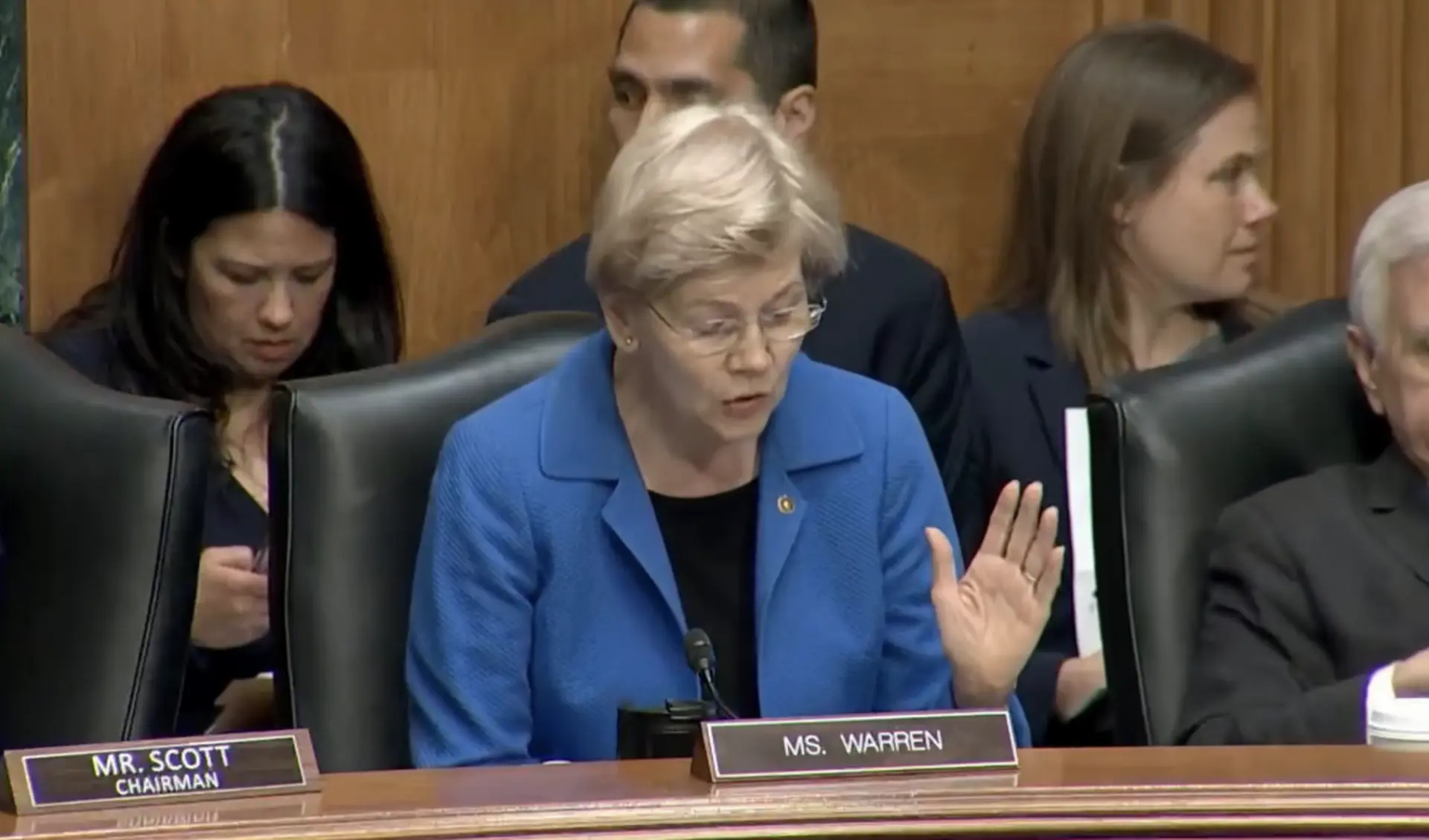
On November 11, 2026, Senator Cynthia Lummis drew a contrast that matters for crypto payroll teams: ACH payroll takes five days to settle; stablecoin payroll settles near-instantly. The reported remarks are not legislation, but they are a policy signal for any global business deciding whether to keep payroll on legacy rails, adopt stablecoin settlement, or run both through a hybrid fiat-crypto account.
Table of Contents
- Senator Lummis Puts Crypto Payroll on the Regulatory Radar
- Where Crypto Payroll Stands Today: A Quick Primer
- What the Five-Day ACH Problem Actually Costs Your Business
- From Policy Signal to Payroll Rails: What Lummis’s Vision Would Require
- How Hybrid Wage Payments Actually Work in Practice (No Hype)
- Crypto Payroll FAQ: Direct Answers to the Questions Founders Ask
- What Founders Should Do Next
- What to Watch in 2027
- Key Takeaways
Senator Lummis Puts Crypto Payroll on the Regulatory Radar
The November 11 statement: five-day ACH vs. near-instant stablecoin settlement
On November 11, 2026, OneBullEx reported that Senator Cynthia Lummis said stablecoins could compress payroll settlement from five days to near-instant in 2026. She framed the five-day payroll window as a cost and friction problem that stablecoin settlement could remove.
As of November 12, 2026, Lummis has not named a specific stablecoin, blockchain, or pilot program; her office has not released a full transcript, and no legislative text tied directly to the payroll comparison has been published. The report includes no dollar figure for the five-day delay.
Why a policy signal matters even without a bill
A Lummis crypto payroll statement matters because it shifts what corporate treasurers and payroll leaders think they are allowed to say out loud. The state of crypto payroll regulations 2026 remains fragmented, and the broader stablecoin regulation debate has been live all year. A sitting senator framing ACH payroll delay as a solvable cost problem lends legitimacy to teams already testing stablecoin settlement.
Where Crypto Payroll Stands Today: A Quick Primer
Crypto payroll is paying employees or contractors in cryptocurrency, almost always in USD-pegged stablecoins in practice. HelloPebl's glossary defines the term that way — crypto used for wages, usually with stablecoins to dampen volatility. ADP has examined the potential of blockchain in payroll and notes the appeal of one settlement rail for global payroll.
How stablecoins solve the volatility problem in payroll
USD-pegged stablecoins keep the unit of account steady between invoice and payout, removing the double-digit swings that make BTC or ETH impractical for wages. Volatility risk is a function of holding time, not the asset alone: when a platform auto-converts fiat to stablecoin at the moment of payment, the employer holds zero crypto exposure beyond a few seconds of execution. A de-peg remains a custody and redemption risk, but not a payroll-timing risk.
What most businesses still get wrong about crypto payroll risk
The common mistake is treating payroll stablecoins as one amorphous risk bucket. There are three exposures: price risk during the holding window, custody and operational risk, and compliance risk. A hybrid fiat-crypto payroll workflow eliminates the first almost entirely; it does not eliminate the second and third.
What the Five-Day ACH Problem Actually Costs Your Business

Liquidity drag, FX spread, and the hidden price of float
The five-day window is not merely a delay; it is a financing cost. During those five days the employer has parted with the funds but the employee has not received them. That float is an interest-free loan your business extends to the clearing system.
Say a company runs a $50,000 monthly payroll. If that cash sits in the settlement pipeline for five days at a 5% annualized short-term rate — a purely illustrative figure — the forgone yield is roughly $34 per run. It compounds and never shows up on a standard P&L. FX spread adds another layer in cross-border runs: the conversion rate is set when payment is initiated, and someone bears movement risk during the delay.
Real example: paying a remote team across three currencies
A US startup with eight people might pay three US employees in USD by ACH, two in Germany in EUR, one in Canada in CAD, and two contractors in USDC. Total monthly payroll, $52,000, is illustrative.
Under a traditional setup, the employer prefunds the ACH legs days early, converts EUR/CAD through an FX desk, pays outbound wire fees, and handles USDC settlement separately. Under a hybrid account, the employer funds one balance, converts EUR/CAD at a stated FX rate, and converts USDC at the moment of each contractor payment. Funds deploy at settlement instead of five days ahead.
From Policy Signal to Payroll Rails: What Lummis’s Vision Would Require
The missing pieces: KYC/AML, payroll taxes, and multi-jurisdictional compliance
Even if stablecoin settlement reaches the five-day-to-instant trajectory Lummis described, payroll is not just moving money. It is withholding income tax, filing returns, handling garnishments, and complying with labor law in each jurisdiction. Stablecoins solve the transport layer; they do not solve the compliance layer.
KYC/AML requires identifying every employer and recipient, including business formation papers, government-issued ID, and an EIN for US entities. Payroll taxes require a USD fair market value captured at the payment timestamp for every crypto wage. Crypto wage treatment differs across US state rules, the EU's emerging MiCA regime, and Asian corridors.
Why a hybrid fiat‑crypto platform is the bridge—not a crypto-only tool
A crypto-only payroll tool forces two ledgers: fiat for vendors, rent, and taxes; crypto for some employee disbursements. A hybrid fiat-crypto payroll platform keeps both rails in one account and one reporting system. That lets a CFO run most payroll in fiat while paying specific contractors or remote employees in stablecoins without a second reconciliation process.
How Hybrid Wage Payments Actually Work in Practice (No Hype)

Funding a payroll run with fiat, settling in stablecoins
The cleanest workflow: fund the payroll account in fiat, run ordinary payroll for most employees, and convert to stablecoin only at the instant a specific payment is due. The rule is never hold crypto longer than the moment of conversion in a payroll run.
Tax withholding, reporting, and staying on the right side of the IRS
US employers paying wages in crypto must withhold federal income tax and payroll taxes on the payment-date fair market value of the crypto, in USD. The IRS treats crypto as property, so the payment is a transfer of property in exchange for services. Clean records require capturing the USD equivalent at the payment timestamp — covered in this blog's analysis of the Treasury's basis reporting stance for crypto payroll.
For accrual-basis companies, crypto wages are a compensation expense booked at fair market value on the payment date. If the employer holds crypto before paying, that holding creates a capital gain or loss; real-time conversion avoids the separate holding position.
The OneSafe example: corporate cards, multi-currency accounts, and instant conversion
OneSafe shows the hybrid model in practice. It is a financial technology company, not a bank; banking services are provided by its partners. The platform supports multi-currency accounts in USD, Euro, and CAD, ACH and domestic and international wires, bill payments, corporate cards with spend limits, multiple virtual cards at no extra cost, and instant crypto-to-fiat and fiat-to-crypto conversions. Fiat deposits and withdrawals cost 0.15%, wire withdrawals cost $25, wire deposits cost $10, FX costs either 0.25% or the prevailing FX rate, and USDC deposits and withdrawals are free. Digital assets are held via Fireblocks custody, and multi-factor authentication is mandatory at signup.
For payroll, a business can fund in fiat, pay US employees by ACH, settle EUR and CAD through multi-currency accounts, and top up contractor USDC payouts at the moment of payment — all from one ledger. Onboarding is fully digital and typically completed within a week, requiring business formation papers, a government-issued photo ID, and an EIN for US companies.
Crypto Payroll FAQ: Direct Answers to the Questions Founders Ask
What is crypto payroll?
Crypto payroll is paying wages, salaries, or contractor fees in cryptocurrency — in most business use, stablecoins such as USDC or USDT rather than volatile assets like bitcoin or ether.
Is crypto payroll safe?
It depends on holding time and custody. An employer holding zero crypto exposure eliminates the headline volatility risk; remaining risks are custodial, operational, and compliance-related. Crypto payroll is not inherently unsafe, but not automatically safe either.
What are the advantages of crypto payroll?
Faster cross-border settlement, lower remittance fees than international wires, access to a global talent pool, and simpler multi-currency payouts. Toku describes stablecoin payroll for global teams as a way to pay distributed workforces without legacy banking friction.
What are the disadvantages of crypto payroll?
Regulatory uncertainty, tax-reporting complexity, custody and operational risk, limited recourse for a mistaken address, and the need for employees to convert crypto to local fiat for everyday spending. Jurisdictional treatment varies, and a stablecoin peg is a claim, not a guarantee.
Is it legal to pay wages in crypto?
It varies widely by jurisdiction. In the US, wages can be paid in crypto if the employer still meets minimum-wage and overtime rules in USD terms and withholds and remits proper taxes, but US state guidance differs. Treat it as a compliance question before a technology question.
How do stablecoins reduce risk in crypto payroll?
They reduce price-swing risk between agreement and payout because the unit of account matches the fiat reference. The meaningful risk reduction comes from instant conversion at the payment moment, which minimizes holding time. Circle's case study on Rise funding wages in stablecoins shows stablecoins as a settlement instrument, not a held asset.
What happens if the crypto price changes after payroll is processed?
If the employer converted at the moment of payment, the employee now holds the coins and the employer's obligation is settled — the employer bears no further price risk. Price changes after settlement are irrelevant to the business.
Do crypto payroll platforms require KYC and AML checks?
Yes, in essentially all serious implementations. Onboarding typically requires business formation papers, a government-issued photo ID, and an EIN for US entities. Standards vary across jurisdictions.
How do companies account for crypto payroll in their books?
Crypto wages are a compensation expense booked at the fair market value of the crypto on the payment date. Because the IRS treats crypto as property, the USD equivalent must be captured at the timestamp of each payment. Holding crypto before paying may create its own tax event.
Can small businesses use crypto payroll?
Yes — especially those with international contractors or remote workers. Hybrid fiat-crypto accounts lower the overhead of running fiat and crypto side by side. OneSafe, for example, offers a free account tier with no monthly subscription, digital onboarding usually completed within a week, and USDC deposits and withdrawals at no charge — though as with any provider, confirm the fee schedule for the corridors you actually use.
What Founders Should Do Next
Questions to ask your payroll provider (or your bank) this quarter
- What settlement time do you actually quote for cross-border payouts — in days, not "fast"?
- Do you support same-day fiat-to-stablecoin conversion at the moment of payment, or do I need to prefund a crypto balance?
- How do you capture the USD fair market value at the payment timestamp for tax reporting?
- What are your KYC/AML requirements for onboarding payees in each jurisdiction where I operate?
- Can I run fiat payroll, wires, corporate cards, and stablecoin payouts from one account and one ledger?
A one-page checklist for evaluating crypto payroll readiness
- Map every payee by jurisdiction and payment method; flag who would accept a stablecoin.
- Confirm the platform supports ACH/wires and instant crypto conversion from the same account.
- Verify FX fees for the currencies you actually use — not just the headline rate.
- Confirm auto-capture of USD value at the exact payment timestamp for every crypto payout.
- Confirm custody arrangements: where are digital assets held, and is multi-factor authentication mandatory?
- Check onboarding requirements: business formation papers, government ID, EIN for US entities.
- Run one small contractor payout end-to-end before moving any regular payroll.
- Document the de-peg and wrong-address procedure — operational risk does not disappear with a stablecoin.
What to Watch in 2027
Regulatory milestones that would make stablecoin payroll mainstream
Watch for a federal stablecoin bill setting reserve and redemption standards, clearer IRS guidance for recurring stablecoin wages, and expanded bank custody approvals — covered on this blog in connection with the Coinbase trust charter. Institutional settlement rails matter too: Visa's Monad move for stablecoin payments and PNC's USDC pilot both push toward the liquidity a mainstream payroll rail needs.
The risk of fragmentation if CBDCs and private stablecoins compete
Fragmentation, not regulation, may be the bigger adoption bottleneck. If central banks issue CBDCs while private issuers push their own stablecoins, payroll rails could balkanize by region, recreating the interoperability problem at a new layer. Lummis's five-day-to-instant vision assumes a single, liquid, dollar-pegged rail; a fragmented market would leave payroll teams managing multiple rails again.
Staying current matters. Joyrise plans, writes and publishes illustrated SEO articles to your Webflow blog every day, with your first article available before you pay — useful for keeping payroll communications updated, though not a substitute for tax or legal review.
Key Takeaways
- Senator Lummis's November 11, 2026 contrast is a policy signal, not law: it legitimizes crypto payroll without removing any compliance obligation.
- The five-day ACH delay is a hidden interest-free loan to the clearing system, and its real cost is float plus FX spread on cross-border runs.
- Volatility risk in crypto payroll is a function of holding time; instant fiat-to-stablecoin conversion at the payment moment removes employer exposure.
- A hybrid fiat-crypto platform lets a business run fiat, wires, cards, and stablecoin payouts from one ledger with clean, timestamped tax records.
- Founders should test one contractor payout end-to-end and confirm timestamp capture and custody before moving any regular payroll.
For founders who want a single account for fiat payroll, multi-currency payments, and same-day stablecoin payouts, open a OneSafe account to see the workflow in practice.
Get started with Crypto in minutes!
Get started with Crypto effortlessly. OneSafe brings together your crypto and banking needs in one simple, powerful platform.