Summary
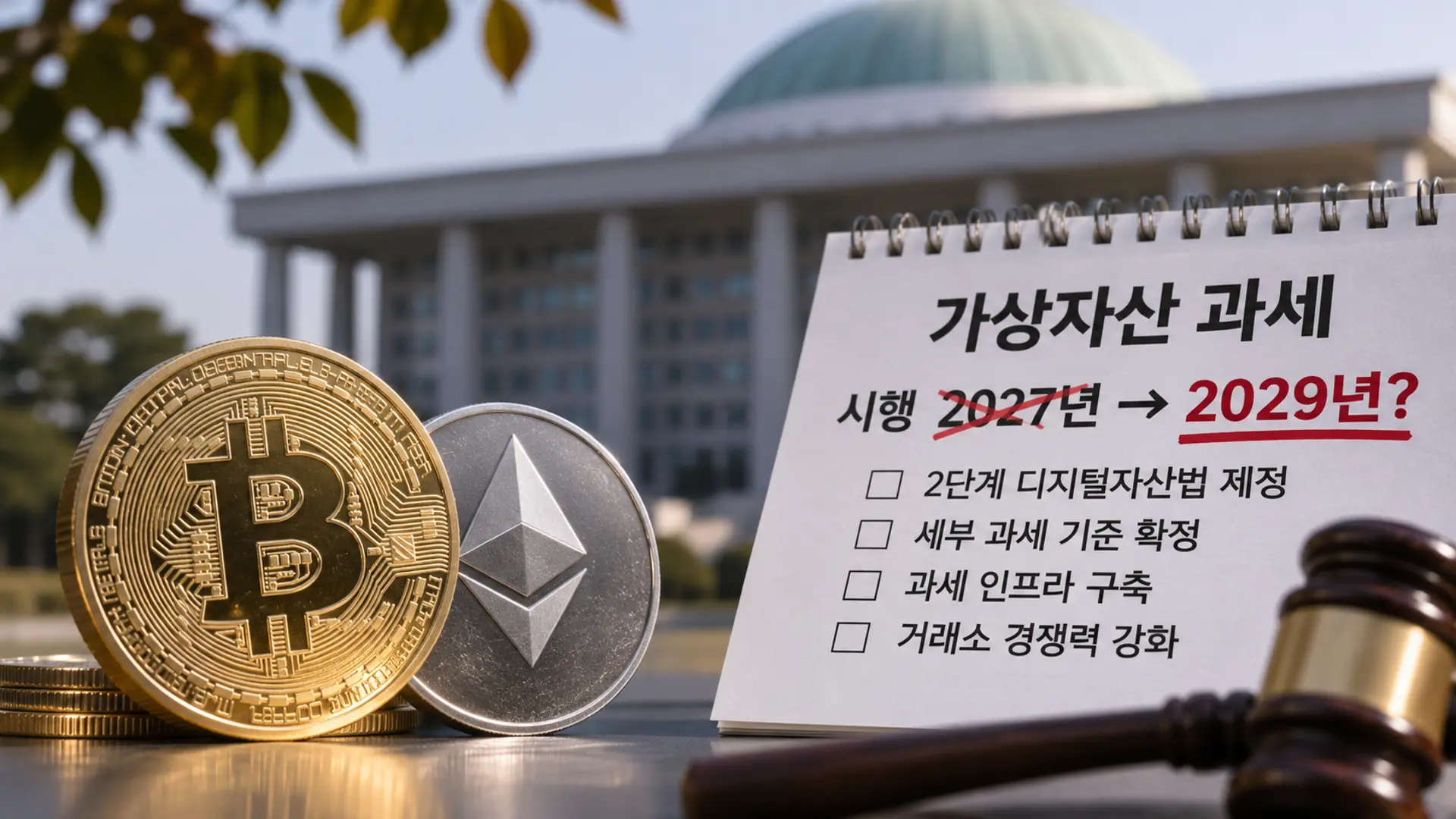
- It said virtual-asset taxation should be delayed by two years to 2029, while a specific legislative and implementation schedule should be finalized.
- It said the current tax framework would remain in place, applying a 22% tax rate to annual income exceeding 2.5 million won from virtual-asset transfers and lending.
- KDA said it is calling for a four-part roadmap that includes enacting a second-stage digital-asset bill, finalizing detailed tax standards, and building tax infrastructure, while also improving tax fairness.
Forecast Trend Report by Period
Debate is intensifying over a further delay to South Korea’s virtual-asset tax, which is set to take effect in January next year, with the industry calling for a specific legislative and implementation timetable.
In a statement on Nov. 4, the Korea Digital Asset Business Association, or KDA, said the tax should be postponed by two years to 2029 and accompanied by a clear execution plan for related regulatory reforms.
Under the current Income Tax Act, a 22% tax rate including local income tax will apply from next year to annual income exceeding 2.5 million won ($1,810) from virtual-asset transfers and lending. The tax was initially scheduled to take effect in 2022, but after three deferrals it has already been pushed back to 2027.
Additional delay proposals are also being discussed in political circles. The ruling People Power Party has called for a two-year postponement, and a related bill has also been introduced within the opposition Democratic Party. Lawmakers on the National Assembly’s Strategy and Finance Committee from the Democratic Party are also reviewing a tax delay, according to the statement.
KDA said a four-point legislative and implementation roadmap should be prepared to prevent another cycle of repeated postponements. It called for enactment of a second-stage digital-asset bill by the first half of next year and for detailed taxation standards to be finalized by the end of next year. The group also urged authorities to build the tax infrastructure by November 2028 and pursue parallel institutional reforms to bolster the global competitiveness of domestic exchanges.
The association also raised concerns over tax fairness. Unlike ordinary stock investors, virtual-asset investors would face a 22% tax on annual income above 2.5 million won ($1,810). It also stressed the need to clarify taxation standards for various transaction types, including mining, staking and airdrops.
KDA Chairman Kang Sung-hoo said the association is seeking various ways to have its position reflected through policy proposals to the National Assembly, policy committees of both ruling and opposition parties, and government authorities.
Suehyeon Lee