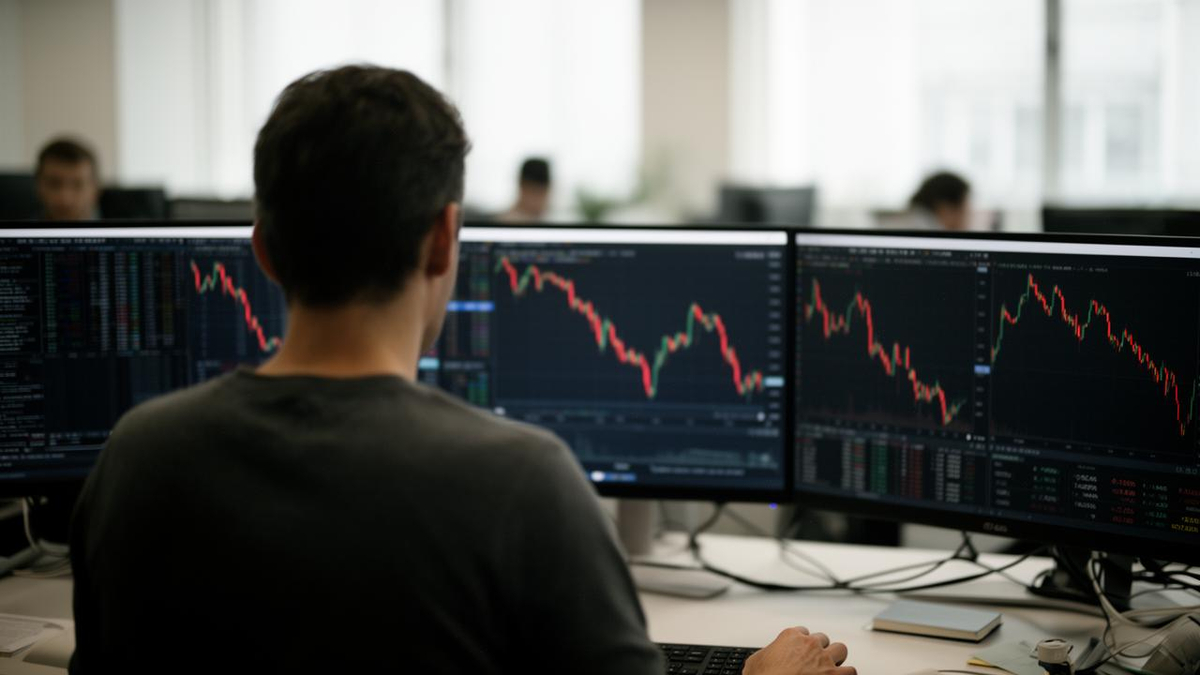
Stocks were not the only asset to fall amid high U.S. interest rates and uncertainty surrounding the artificial intelligence industry. With the departure of Nvidia Chief Executive Jensen Huang and concerns about money shifting ahead of Anthropic's initial public offering weighing on investor sentiment, bitcoin slipped to around $65,000 and gold, a traditional safe-haven asset, dropped more than 6% in a week. Even as oil prices fell more than 3% in a single day, worries about further monetary tightening persisted, and the dollar index hit its highest level in 19 months.
Bitcoin traded at around $65,000 on the 16th, according to the London Stock Exchange Group on the 17th. That is about 16% below its level at the end of last month. On the 14th, it briefly fell into the $62,000 range, its lowest since mid-July. That is roughly half the record high of about $126,000 reached in October last year.
The pullback in buying also showed up in exchange-traded fund flows. About $1.1 billion flowed out of bitcoin ETFs on a net basis in the week through the 15th, according to data analytics firm DefiLlama. It was the third consecutive week of net outflows. Lee Young-gon, head of the research center at Toss Securities, said money has a hard time moving into risk assets when uncertainty is rising. He added that concerns the Democratic Party's new majority in Congress could slow the pace of policy on digital assets and AI have deepened investors' wait-and-see stance.
Gold fell even as risk aversion intensified. The international gold price stood at $3,853 per troy ounce on a continuous contract basis on the 16th, down 6.36% from $4,114.50 on the 9th, a week earlier. It is 14.47% below the $4,504.90 recorded on Sept. 3.
Analysts said the recent move back above 5% in the U.S. 10-year Treasury yield has reduced the incentive for investors to buy gold or bitcoin and accept price swings. Baek Young-chan, head of the research center at Sangsangin Investment & Securities, said the market is pricing in all at once the burden of 5% Treasury yields that it had not sufficiently reflected until now. He added that investors who have taken losses from the recent decline in asset prices are also becoming more cautious about new purchases.
Goldman Sachs said private-sector gold demand will contract while the Federal Reserve maintains its tightening stance, increasing price volatility. It forecast that central bank gold purchases would support prices, lifting them to as high as $4,650 an ounce by the end of 2027. It projected that prices would reach $5,600 by the end of 2028 once the Fed begins cutting rates and Western ETF demand for gold recovers.
The high rates that pushed gold lower also underpinned dollar strength. The dollar index, which measures the greenback against six major currencies including the euro and the yen, rose to 103.695 on the 17th after reaching 103.636 the previous day. That is the highest level since April 3 last year, when it stood at 103.941. The U.S. core consumer price index rose 0.3% in October from the previous month, beating market expectations and strengthening the case for another Fed rate increase in December. Expectations that high rates will persist have boosted the appeal of dollar-denominated assets, while demand to secure dollars as a hedge against market turmoil has also increased.
The drop in oil prices failed to spark a rebound in equities. West Texas Intermediate crude for December delivery settled at $85.72 a barrel on the New York Mercantile Exchange on the 16th, down 3.21% from the previous session. It was the lowest close since Aug. 28. Brent crude for January delivery ended 3.55% lower at $92.44 a barrel. With Middle East crude exports recovering, the International Energy Agency forecast that global oil supply would exceed demand by 1.7 million to 2 million barrels a day in the fourth quarter.
Some analysts said tightening concerns could ease if lower fuel and shipping costs slow actual inflation. Kim Ji-woo, an analyst at KB Securities, said that if the recent declines in oil and shipping costs feed into price indexes with a lag, the market's tightening concerns could gradually subside.
Original reporting by Jung Yu-min, Shin Ji-min and Park Shin-won for Seoul Economic Daily.
AI-translated from Korean. Quotes from foreign sources are based on Korean-language reports and may not reflect exact original wording.
Watch · Seoul Economic Daily
Most Read This Week
- 1
 Nvidia CEO Admits Affair With Woman Suspected of Chinese Spying
- 2
 Jensen Huang Called Himself a "Piece of Shit" Before Quitting Nvidia
- 3
 Madison Huang Cancels Korea Trip, Scrapping Meeting With Minister
- 4
 Samsung to Make SpaceX Satellite Chips in Texas
- 5
 Hyundai Department Store Recreates 1985 New York for Christmas