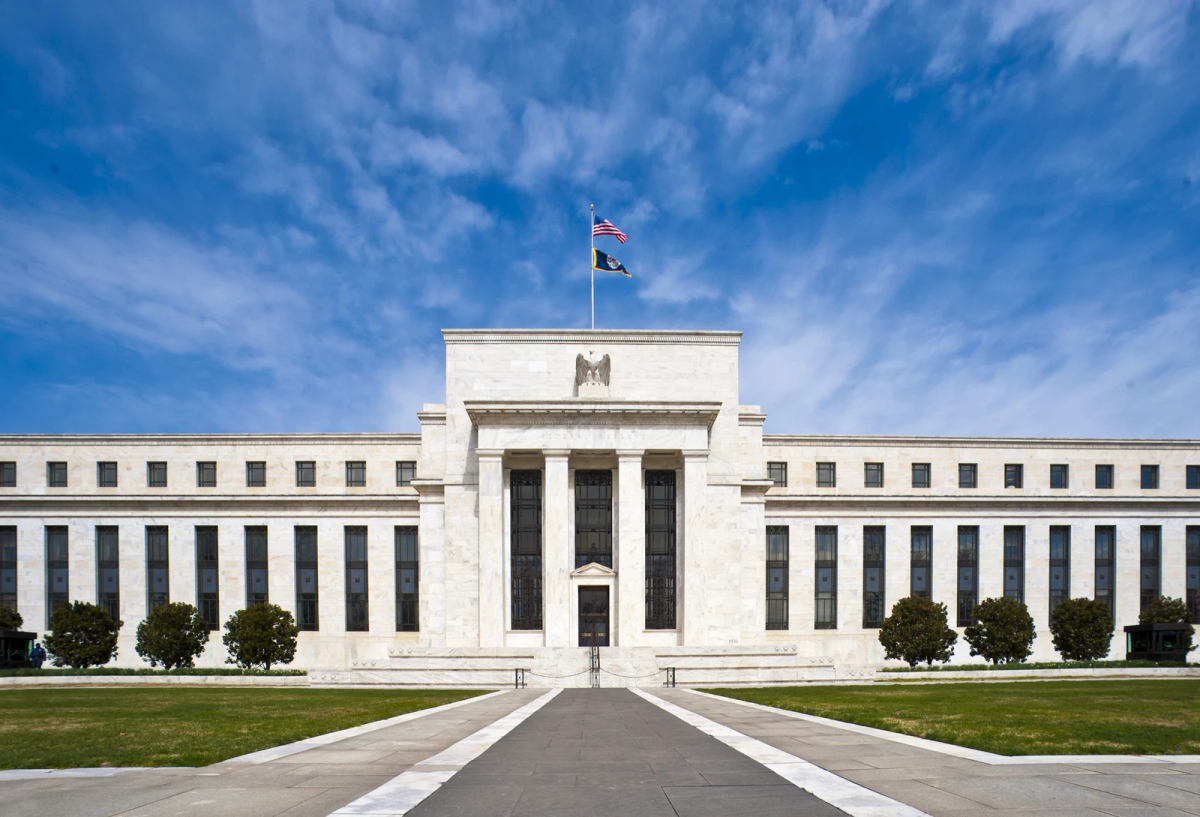
Bitcoin treasury companies' ability to keep buying the cryptocurrency may hinge less on their cash cushions than on how Federal Reserve policy reshapes the cost of raising new money. Minutes from the Fed's October 27-28 meeting, released November 18, showed that nearly all participants judged further rate increases would likely be appropriate, with two members favoring an immediate quarter-point move. The central bank left its benchmark target range at 3.75% to 4.00% at that meeting, and the minutes reflect views at the time rather than a commitment to act at the next gathering.
For firms that use publicly traded equity and preferred stock to fund Bitcoin accumulation, that signal matters on two fronts. Higher rates tend to push investors to demand richer yields on newly issued preferred shares, lifting the cost of that capital. A narrower premium between a company's share price and the Bitcoin value attributable to each share, meanwhile, erodes the appeal of selling common stock to buy more coins.
StoneX analyst Mark Palmer, cited in a November 19 Cointelegraph analysis, stressed how central that premium is: when the gap between share price and underlying Bitcoin holdings shrinks, issuing equity to fund fresh purchases loses much of its advantage. The dynamic does not shut down buying outright, but it changes the arithmetic behind every deal.
Strategy, the largest public Bitcoin treasury company, offered a live example in its November 15 investor briefing. In the week through that date it sold $244.7 million of common stock, repurchased $228.1 million of STRC preferred shares and added 485 BTC for $33.4 million, an average price of $68,887 per coin. The company also reported $4.90 billion in USD Reserve and USD Cash, which it said covers roughly 3.42 years of current preferred dividends and debt interest; $18.9 million of the reserve funded preferred dividends during November 9-15.
That reserve speaks to the company's near-term obligations, not to its capacity to finance expansion. Analysts draw a distinction between having cash on hand and being able to raise capital on terms that justify another purchase.
Note: Figures are as reported by Strategy in its November 15 investor briefing.
Buying had already cooled well before the latest minutes. Strategy added a net 1,666 BTC in the third quarter, down from 83,901 BTC in the prior quarter, according to CoinDesk data cited in an October report. Other public companies bought 5,617 BTC in the third quarter versus 45,725 BTC in the second.
The sector has not stopped accumulating altogether. CoinDesk Research reported that digital-asset treasury companies lifted collective holdings by 15,976 BTC in October. Yet valuations often lagged the assets themselves: the research put Strategy at 0.76x mNAV, BitMine at 0.90x and Metaplanet at 0.55x, meaning each traded below the estimated gross value of its digital assets. Discounts of that size weaken the case for issuing shares to fund more buying.
Bitcoin's price backdrop has added to the caution. At 19:13 UTC on November 19, the token changed hands at $62,674, down 0.16% over 24 hours and 12.56% over seven days, while the Crypto Fear & Greed Index sat at 10, a reading classified as Extreme Fear.
Note: Market data do not establish a direct link between rate expectations and Bitcoin's recent price moves.
The interplay matters beyond individual balance sheets. Treasury companies have become a visible source of spot demand, so any slowdown in their purchases removes a marginal buyer from the market. Their preferred shares and convertible debt also sit in income portfolios that compete with higher-yielding alternatives when rates climb, raising the bar for each new offering.
What to watch now is the terms and size of coming common and preferred issuances, the pace of reserve drawdowns, and whether share prices move back to premiums over per-share Bitcoin value. Strategy's weekly purchase disclosures and investor briefings will offer the most timely gauge of whether expansion is funded with fresh capital or with cash already on the books. A large reserve can cover current coupons; it cannot by itself restore the economics of issuing equity at a discount.
Once added, BigGo Finance appears first in Google Search Top Stories, so you get the broadest, most up-to-the-minute, and most comprehensive global financial news first.