Liquidation Nightmare Sends Bitcoin Into the Plunge
Asian technology shares have taken another beating, China’s latest economic numbers have disappointed across the board, and Wall Street’s AI trade is heading into a potentially uncomfortable week. Yet King Dollar remains remarkably well supported, with the Fed’s hawkish repricing proving harder to dislodge than many expected. EUR/USD is now approaching 1.1000, where the temptation to call a bottom will undoubtedly grow louder. But with US front-end rates still doing the heavy lifting, this isn’t the moment to start playing hero. The interesting question is whether the dollar’s biggest threat comes from the Fed at all, or from the very technology trade that has underpinned American exceptionalism.
• The dollar’s interest-rate advantage is proving stubborn, but the next challenge may come from outside the currency market.
• EUR/USD is approaching a significant psychological level, with little encouragement from the relative monetary-policy backdrop.
• China’s disappointing economic figures add another complication to an already uncomfortable opening for Asian risk assets.
• Nvidia and Anthropic could have more influence over the next dollar move than another round of Fed speeches.
Asia’s AI Hangover Meets King Dollar
Wall Street’s technology hangover has travelled across the Pacific, and Asian equities are discovering that the AI trade doesn’t come with a money-back guarantee. The regional technology sector plunged more than 6%, its sharpest intraday decline since November 6, while Nasdaq 100 futures lost another 1% and the broader Asian equity benchmark dropped 2.1%.
Friday’s semiconductor selloff has clearly left investors nursing more than a few bruises. Nvidia’s leadership turmoil, Microsoft’s recent outage and growing doubts about returns on enormous AI investments have unsettled a market that spent much of the year treating technology capital expenditure as a one-way ticket to higher valuations. With Nvidia reporting Tuesday and Anthropic expected to make its public-market debut Thursday, the sector faces a serious examination of whether Wall Street’s appetite for financing the AI boom remains intact.
China hasn’t offered much assistance either. October retail sales, fixed-asset investment and industrial production all disappointed expectations, reinforcing the uncomfortable split between an export-oriented manufacturing sector that continues to perform reasonably well and a domestic economy still struggling to find its feet. Property prices are showing tentative signs of stabilization, but it’s a thin silver lining when the broader demand picture is this uninspiring.
Against that backdrop, the dollar remains the currency market’s preferred heavyweight, and the interest-rate story explains why.
US two-year swap rates have risen roughly 35 basis points since Christopher Waller floated the possibility of a 50-basis-point December hike and core CPI surprised to the upside. The key point is that markets haven’t fully bought the jumbo-hike argument. They’re pricing in consecutive quarter-point increases in December and January, a considerably more credible tightening path and therefore much harder for the Fed’s moderates to push back against.
That’s what makes this dollar rally difficult to fade. It’s not simply a speculative squeeze waiting for a mildly dovish Fed official to pull the rug out. There’s a genuine rates argument underneath it, and the market has little reason to abandon that view while inflation remains stubborn.
Chair Kevin Warsh speaks today, with the October FOMC minutes due Wednesday, but after last week’s aggressive repricing, I suspect the bar for another meaningful hawkish surprise is relatively high. A period of dollar consolidation wouldn’t be surprising, particularly after such a strong move, although I’d still expect dips to attract buyers.
The more interesting risk is that the technology selloff becomes sufficiently ugly to pull US yields lower and force the market to reconsider how much additional Fed tightening the economy can absorb.
King Dollar still owns the high ground, but the potential banana skin may be sitting in the Nasdaq rather than the Eccles Building.
EUR/USD at 1.1000: Don’t Mistake a Round Number for a Trading Signal
The euro is now staring down 1.1000, and I suspect we’ll hear plenty about this being the level where the single currency finally finds its feet. Perhaps it does, particularly with a relatively light American economic calendar. But round numbers have a habit of attracting heroic forecasts from people who haven’t spent enough time watching them disappear through the dealing screen.
The underlying rates picture remains distinctly unfriendly.
US two-year swap rates have risen roughly 35 basis points since Christopher Waller floated the possibility of a 50-basis-point December hike and core CPI surprised to the upside ( Dark Side of the Boom)
US two-year swap rates have risen roughly 35 basis points since Christopher Waller floated the possibility of a 50-basis-point December hike and core CPI surprised to the upside ( Dark Side of the Boom)
The ECB is hardly waving the white flag on inflation, but its hawkish rhetoric doesn’t carry quite the same weight as the Fed’s. The US economy has a more convincing demand-driven inflation problem, and investors are increasingly prepared to believe Washington may need a longer tightening campaign.
The contrast with September 2025 is particularly telling. EUR/USD was trading roughly 5–6% higher when nominal rate differentials last reached similar levels, but the dollar then carried a considerable risk premium after the Liberation Day tariff turmoil. Today, that premium has shifted, with European fiscal uncertainty and wider real-rate differentials working against the euro. Ing Bank
The contrast with September 2025 is particularly telling. EUR/USD was trading roughly 5–6% higher when nominal rate differentials last reached similar levels, but the dollar then carried a considerable risk premium after the Liberation Day tariff turmoil. Today, that premium has shifted, with European fiscal uncertainty and wider real-rate differentials working against the euro. Ing Bank
I wouldn’t dismiss the possibility that markets have ultimately overestimated how persistent American inflation would be. A meaningful dovish repricing could eventually reverse part of the dollar’s advance, but that’s a trade for when the evidence starts changing, not when the positioning simply looks uncomfortable.
What can halt the dollar? The interest-rate advantage would have to stop widening if the euro is going to mount a credible defence.
And that’s where Nvidia and Anthropic enter the currency conversation. A deeper AI equity correction could drag US yields lower, challenging the Fed repricing that has powered the greenback. Initially, the dollar may still benefit from defensive demand, but a sustained deterioration in financial conditions would make the rates story considerably less one-sided.
For now, the dollar remains the trade the market is reluctant to fight. But after last week’s sizeable move in front-end rates, I’m more inclined to respect the existing momentum than assume another spectacular leg higher is inevitable.
King Dollar still has the crown, EUR/USD has 1.1000 in its sights, and the Fed remains firmly in the greenback’s corner. The interesting twist is that this week’s most important FX catalyst may not come from a central banker at all. It may come from a chipmaker who simply can’t restore market confidence from an AI laboratory.
Liquidation Nightmare Sends Bitcoin Into the Plunge Tank Gripped By “Extreme Fear”
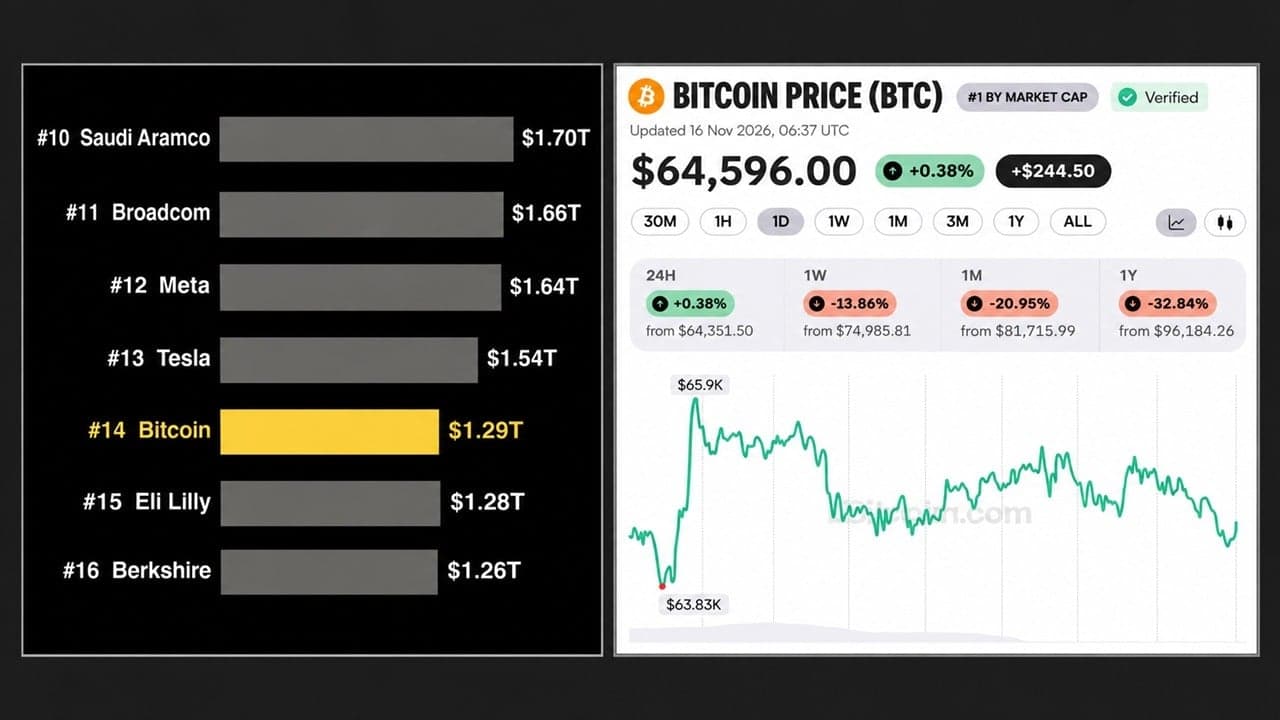
Bitcoin plunged to a four-month low overnight as leveraged long positions unwound, compounded by weeks of ETF fund outflows, expectations of higher interest rates (and surging real yields), and concerns about tighter crypto regulation following the Democratic sweep of Congress. The deepening bear market also comes amid a broader retreat from risk assets as uncertainty surrounds the AI bubble, with Jensen Huang’s departure from Nvidia adding to those concerns last week.
Extreme Fear
CoinMarketCap’s Fear and Greed Index registered “extreme fear“ early Sunday.
Technicals
Since peaking around $87,162 in late September, Bitcoin has tumbled into a bear market, dropping roughly 28% to around $62,577 by early Sunday morning. It subsequently pared some losses as a potential short-term floor emerged, recovering to about $65,250 as of 9:15 a.m. EST, still down roughly 25% from its peak.
Panic into the weekend.
“I think this is a technical move, as Bitcoin broke down through its 200-day moving average of about $73,000, which has caused a slew of liquidations and new shorts to develop,” said Rich Rosenblum, co-founder of crypto market maker GSR, as quoted by Bloomberg.
Rosenblum added that a technical floor might be emerging.
Macro
Macro conditions have not helped. Hotter-than-expected U.S. inflation readings (October CPI rose 0.4% month-over-month) shifted market pricing toward a December Fed rate hike, pushing 10-year Treasury yields above 5% and strengthening the dollar.
Real yields have been surging...
This environment has raised the opportunity cost of non-yielding assets like Bitcoin, while the broader risk-off tone in technology stocks has spilled over, given Bitcoin’s elevated correlation with the Nasdaq.
Liquidation
“Bitcoin’s drop below $69,000 was directly triggered by a concentrated liquidation of leveraged long positions,” HashKey senior analyst Tim Sun told Decrypt. “Though the deeper issue lies in steadily weakening market demand.”
Roughly $1.3-2 billion in crypto positions were wiped out in 24-hour windows, mostly Bitcoin longs, accelerating the decline in classic liquidation-driven fashion.
Sun pointed to a combination of pressures, including six consecutive days of net outflows from US spot Bitcoin ETFs, according to CoinGlass data. He also cited shrinking stablecoin supply and MSCI’s removal of digital asset treasury firm Strategy from its indexes.
“ETFs, stablecoin liquidity, and corporate treasuries have served as the primary capital pillars supporting this Bitcoin rally,” Sun said. “With all three coming under simultaneous pressure, the market is losing the marginal buying power that previously propelled prices higher.”
ETF Flows
Bloomberg data show weakening demand for Bitcoin ETFs, with late-October and early-November outflows eroding the robust inflows seen in September.
BlackRock’s IBIT is the black line and accounts for the largest swings. It recorded a daily inflow above $600 million in October, followed by consecutive weeks of outflows through mid-November.
Sun added that a meaningful rebound would require “long-term allocation capital” to flow back into Bitcoin ETFs. This may suggest that without it, more trouble could lie ahead, especially with the prospect of another Federal Reserve rate increase next month.
Zero Hedge
MUFG FX Weekly: King Dollar Still Holds Court, but the Yen Trade Is Getting Interesting
The dollar has returned to the driving seat, and the latest inflation surprise has given the Federal Reserve every reason to keep its foot on the monetary brake. MUFG’s Derek Halpenny, Lee Hardman and Abdul-Ahad Lockhart see further near-term dollar strength, with DXY breaking above 103 and USD/JPY pushing back through 160. But there is a fascinating contradiction beneath the surface. Japanese authorities are again approaching their intervention threshold, domestic investment flows are beginning to change, and Australia’s currency is losing the support of an increasingly mature tightening cycle, softer energy prices and fading enthusiasm for the AI trade. MUFG is putting that combination to work with a new short AUD/JPY recommendation. For traders, the message is more sophisticated than simply buying dollars or selling yen: the next opportunity may lie in choosing the right cross rather than trying to call the exact turning point in the dollar.