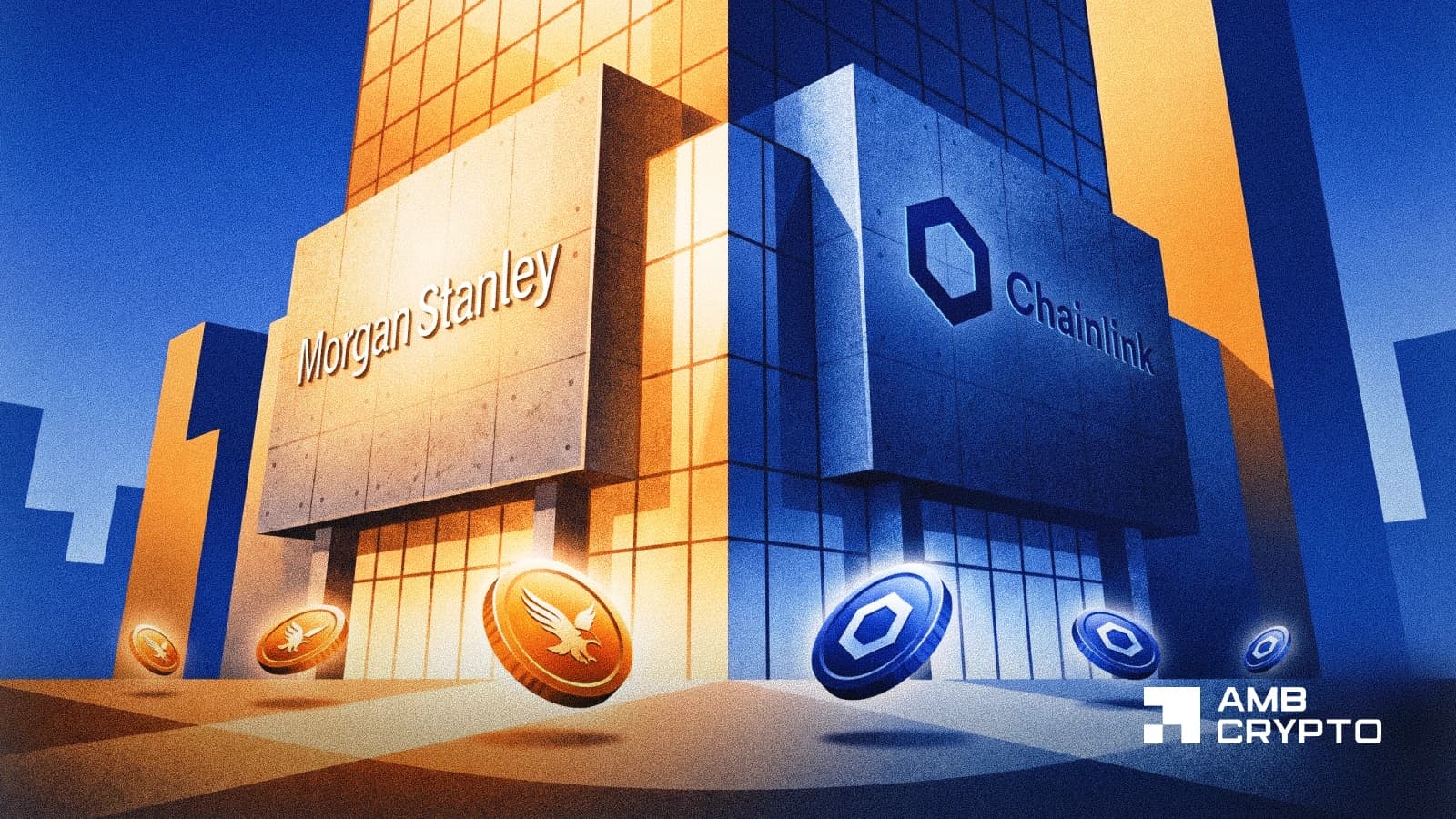
The trend of moving towards tokenizing traditional markets is accelerating as large financial organizations begin to implement blockchain-based systems.
Morgan Stanley has begun its transition to implementing such technology, joining forces with DTCC by utilizing its new tokenization service.
In fact, DTCC launched its DTC Tokenization Service (DTS) into live production on the 28th of October. The service utilizes blockchain technology to convert securities held by DTCC clients into custody into tokens.
If successful, it could increase the liquidity of equities and facilitate better usage of collateral in lending transactions.
In addition, Morgan Stanley’s involvement represents a significant step forward from experimental projects into practical institutional adoption. The next challenge will be to integrate these tokenized assets with existing market infrastructure.
Commenting on the move, Amy Oldenburg, the bank’s Head of Digital Assets Strategy, said the hands-on integration experience will inform the firm’s digital asset development as markets evolve.
This highlights how practical implementation could shape wider institutional adoption.
Chainlink expands Asian equity markets
That institutional push is also reaching blockchain data providers. This is as Chainlink [LINK] expands access to Asian stock markets.
Its APAC Equities Streams now cover over $40 trillion in equity markets across China, Japan, South Korea, Taiwan, and Hong Kong. The feeds provide live prices for companies including TSMC, Tencent, Samsung, SK Hynix, and BYD.
This gives blockchain platforms access to traditional stock market data. The feeds are already available on Lighter, Jupiter Exchange, and Predict, supporting trading and prediction markets linked to traditional stocks.
Together, these developments show how banks and crypto firms are bringing financial assets onto blockchain networks, although wider adoption will depend on demand.
Tokenized assets face market test
As institutional participation and on-chain access expand, actual market activity will determine whether tokenization gains lasting traction. To achieve this, rising trading volume must lead to consistent settlement and increasing transaction counts.
If not for sustained settlement activity, then creating more options in terms of asset availability does not necessarily result in increased demand.
Therefore, distinguishing between institutional adoption and market adoption is important when assessing adoption metrics. Morgan Stanley and DTCC are working to make traditional assets accessible to blockchain-type networks.
However, simply making an asset accessible via blockchain does not automatically create a sustainable demand for that product. Similarly, Chainlink is providing data necessary for on-chain trades.
However, infrastructure is only one component needed to create active markets. For instance, repeated trading activity by investors will support the creation of liquid markets. Additionally, higher levels of liquidity will reduce friction associated with completing trades.
Ultimately, tokenization’s success will depend less on how many assets reach blockchain networks and more on how often people use them.
Final Summary
- Morgan Stanley and DTCC are bringing U.S. equities and Treasuries onto blockchain networks.
- Chainlink [LINK] now streams data across $40 trillion in Asian equity markets, but adoption depends on trading, liquidity, and settlements.