- live LIVE: Crypto extends crash with global tech stocks amid Nvidia Jensen Huang uncertainty November 16, 2026 Live Updates
- Russians can now legally buy Bitcoin, Ethereum and Tether 52 seconds ago Regulation
- Tether Capital invests $15 million in Brazil’s Nomad to widen dollar access 20 minutes ago Business
- UK’s largest Bitcoin treasury Smarter Web pushes cost basis down with 55 BTC purchase 2 hours ago News
- Tesla commits €3 billion to Cybercab plant as EU robotaxi rules lag 12 hours ago News
- Hyperliquid Policy Center urges CFTC to lock in event contract rule as courts split 20 hours ago Regulation
- CFTC’s Selig says states are trying to jail prediction-market founders November 14, 2026 Regulation
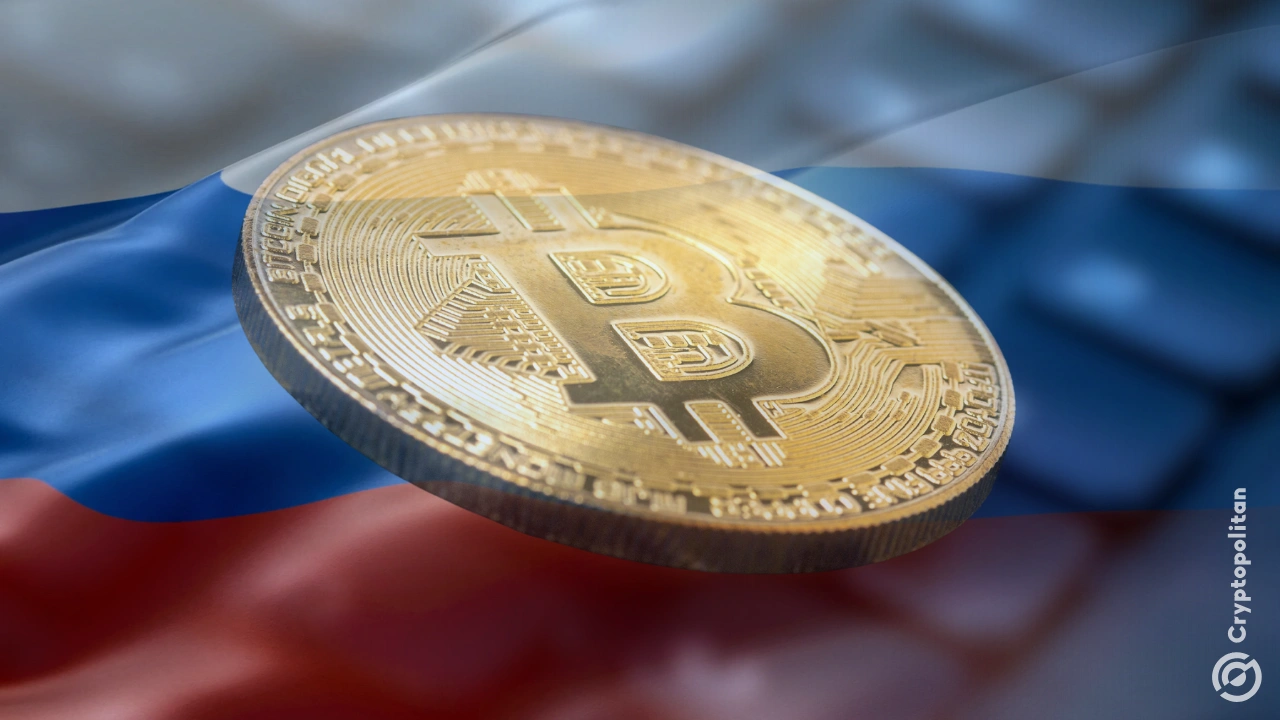
- Russia’s central bank grants investors access to BTC, ETH and USDT.
- Its directive comes into effect this Tuesday; trading may start on Sunday.
- The number of companies licensed as cryptocurrency exchanges approaches 30.
Bank of Russia’s directive giving ordinary Russians legal access to the top three cryptocurrencies on the market has entered into force on Tuesday.
The monetary authority has already licensed 29 cryptocurrency exchanges to launch operations on Sunday, although it’s yet to approve their trading rules.
Russian investors to trade BTC, ETH, and USDT after passing test
The crypto directive of the Central Bank of Russia (CBR) approves Bitcoin (BTC), Ethereum (ETH) and Tether (USDT) for public trading.
The document, which was adopted in September and registered by the Justice Ministry at the end of October, comes into effect on November 17.
It permits “non-qualified” investors to buy, sell and exchange for fiat the most liquid coins, not without conditions and strict limitations.
They will be able to purchase them through brokers, asset managers, or crypto exchanges, Russia’s official state-run news agency TASS noted.
The digital assets can be acquired either through exchange trading or in over-the-counter (OTC) transactions, its report detailed late on Monday.
Purchases are also capped for non-professionals at an annual 300,000 rubles per single intermediary, or a little over $3,600 at the current exchange rate.
Qualified investors and companies will have unlimited access to most traded cryptocurrencies, with certain restrictions regarding privacy-oriented coins.
Nevertheless, both categories will have to pass a dedicated test to determine their knowledge of the specifics as well as their awareness of the risks that come with crypto investing.
However, the Bank of Russia is yet to produce an industry standard for this testing, and that is why Russians can’t find cryptocurrencies in their banking apps today.
Its absence prevents market participants from offering the digital assets immediately, as pointed out by Alexander Kretov, who heads blockchain technology development at T-Bank, the biggest Russian private bank by number of customers:
“The main reason why T-Bank clients don’t yet see cryptocurrencies in their banking app is the lack of a market standard for testing. As soon as the Bank of Russia publishes one, we will be ready to launch external operations.”
“The main reason why T-Bank clients don’t yet see cryptocurrencies in their banking app is the lack of a market standard for testing. As soon as the Bank of Russia publishes one, we will be ready to launch external operations.”
Nearly 30 exchanges licensed to host crypto trading
Russia legalized crypto with the law “On digital currencies and digital rights,” which was adopted this past summer and entered into force on September 1.
When shortlisting selected assets for public trading, its central bank took into account their total capitalization, daily trading volume and price history on global platforms.
Only the two largest decentralized cryptocurrencies and the most popular U.S.-dollar pegged stablecoin met its criteria, such as a market cap averaging $60 billion over the past two years.
Technically, authorized trading platforms will be able to list them on November 17, as already reported by Cryptopolitan earlier this month.
However, last week the CBR announced that exchanges may start trading digital assets on November 22, after their trading rules are approved.
The regulator referenced another directive, which sets out the requirements for entities facilitating the organized trading of digital currencies and rights.
VTB also told TASS it’s preparing to offer crypto services to private investors. The majority state-owned banking giant is among those licensed to operate as trading and custodial platforms.
Meanwhile, the business news outlet RBC reported that the Bank of Russia has added 29 organizations to its register of cryptocurrency exchanges since the introduction of the comprehensive framework. 10 will work as digital depositories.
In the two groups are major traditional financial institutions, associated with or controlled by the government, such as the largest Russian lender, Sberbank.
The latter, as well as the country’s main market for stocks, the Moscow Exchange, already unveiled plans to commence crypto trading on the first day of December.
While big established players are likely to dominate Russia’s strictly overseen crypto sector, amid several recent exits of foreign platforms, the lists include lesser-known entities, too. Another three joined ahead of the weekend.
The tokenization platform Atomyze and the blockchain developer Voltari are among the state-approved intermediaries, Russian media revealed earlier, alongside Zephyr, Sistema Crypto, Moy Bitcoin, and others.
A number of the licensed firms have been subject to international financial restrictions imposed over their alleged participation in sanctions evasion through either fiat or cryptocurrency transactions.
If you're reading this, you’re already ahead. Stay there with our newsletter.
Disclaimer. The information provided is not trading advice. Cryptopolitan.com holds no liability for any investments made based on the information provided on this page. We strongly recommend independent research and/or consultation with a qualified professional before making any investment decisions.
Lubomir Tassev
5 Ingenious Applications of ChatGPT And What You Should Do About Them
93% Business Leaders Favor AI-Powered Solutions for Brand Sustainability Management, Reuters
Here’s How Macron Supports France’s Vibrant and Productive AI Ecosystem
Bloomberg Estimates the Generative AI Market to Reach $1.3 Trillion by 2032
- Bitcoin ETF vs. Ethereum ETF: What’s the Difference? November 5, 2025 Learn Crypto: Beginner Guides
- What Is Base? The Ethereum Layer-2 Network Launched by Coinbase October 21, 2025 Learn Crypto: Beginner Guides
- Dogecoin vs. Bitcoin: Key Technical Differences October 20, 2025 Learn Crypto: Beginner Guides
- What Is TVL (Total Value Locked) in Crypto? October 14, 2025 Learn Crypto: Beginner Guides
- How to Read a Crypto Whitepaper? October 13, 2025 Learn Crypto: Beginner Guides
- Ripple vs. XRP vs. XRP Ledger: What’s the Difference? October 13, 2025 Learn Crypto: Beginner Guides