Disclaimer: The opinions expressed by our writers are their own and do not represent the views of U.Today. The financial and market information provided on U.Today is intended for informational purposes only. U.Today is not liable for any financial losses incurred while trading cryptocurrencies. Conduct your own research by contacting financial experts before making any investment decisions. We believe that all content is accurate as of the date of publication, but certain offers mentioned may no longer be available.
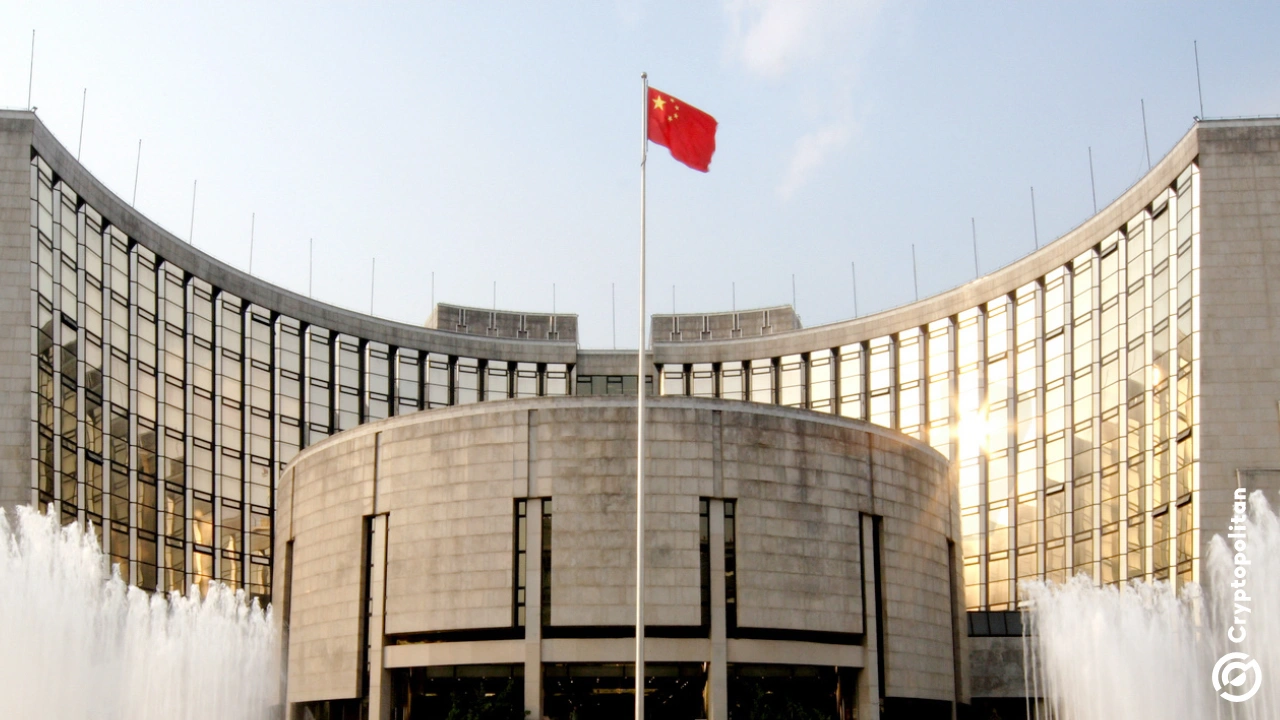
A joint operation of the People's Bank of China with Shanghai police clamped down on the Solana Accelerate China 2026 four-day tour. Authorities blocked the project's events in Shanghai, while the financial regulator in parallel launched an investigation against those locals who helped the blockchain platform with logistics and public relations.
What drew such a harsh reaction from the Chinese authorities was 'too aggressive' offline marketing of the tour. On the evening of October 14, a team associated with Solana, together with Shanghai contractors, put giant vibrant logos of the SOL token on the Citigroup Tower skyscraper facade in Lujiazui - the very heart of Shanghai's financial district. This was not just an ad: top managers, including Solana Foundation president Lily Lu, started publicly boasting about the opening of Shanghai's new office in a prestigious building.
All this massive campaign predictably caused an excitement in crypto circles. Even Binance founder Changpeng Zhao, known simply as CZ, expressed his amusement, calling 'amazing' the fact that Solana managed to not only do a promo in China, but get an office there as well. BNB Chain did not achieve such a success, added CZ.
Blockchain that (almost) made it
It seems like the organizers tried to bypass the regulatory barriers using a positioning trick. The four-day tour between Shanghai, Hangzhou, Shenzhen, and Beijing was marketed strictly around technologies like AI agents, robots, IT development - not about crypto at all.
The maneuver did not get recognition in China to say the least, and the backlash did not take long to follow.
The morning session on October 16 in Shangri-La was shut down outright, with participants held for over an hour on the street after police suddenly arrived. Lily Lu tried to narrow the angles and stated that the cancellation was caused by registrations quadrupling, so the site was not ready to invite all registrants.
Fast forward to November 6 and representatives of the People's Bank of China, in an exclusive interview with the state agency Financial News, finally ended speculations on what actually happened. He directly called the skyline ad and all the aligned events an illegal marketing of virtual currencies. The Central Bank's position is 'black and white' there: SOL is a cryptocurrency and Solana's infra not only facilitates coins issuance, but also helps stablecoin turnover (especially USDT), which is banned.
Organizers in the face of Solana Foundation breached the crypto-risk agreement jointly issued back in February 2026 by eight Chinese authority departments. The document directly bans all the promotion of overseas crypto projects and implements individual liability for Chinese citizens and companies that help to do this.
Solana Foundation hasn't provided any official comments on the matter yet.
The signal by People's Bank of China is unambiguous though: full cleanup of all the mainland market out of foreign blockchain networks and activities associated with them.