Table of Contents
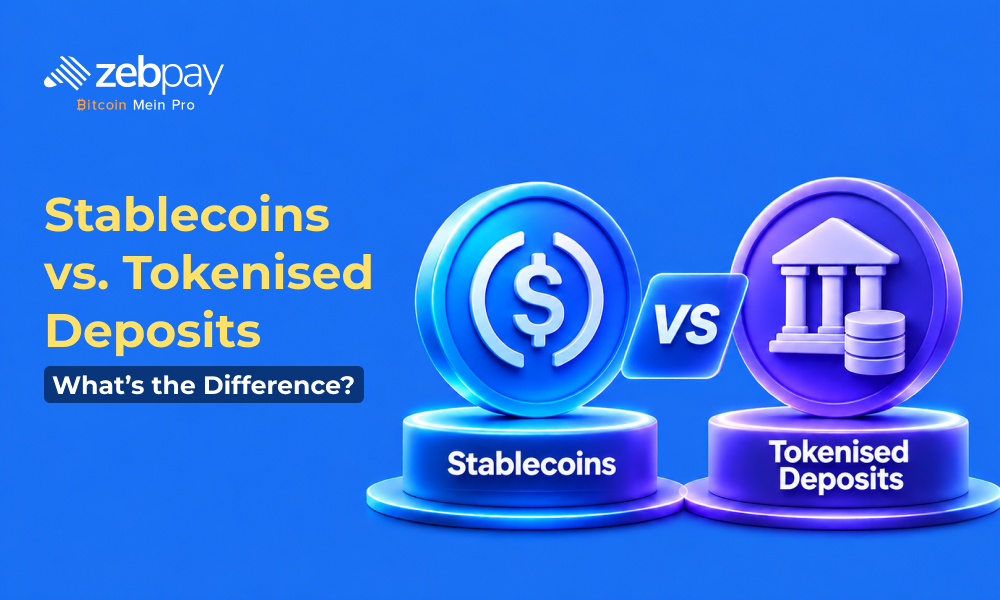
The evolution of blockchain technology is bringing new forms of digital money into focus, with stablecoins and tokenised deposits emerging as two important developments in the financial ecosystem. Although both use digital tokens to represent monetary value and enable transactions through blockchain-based infrastructure, their underlying structures are fundamentally different. Stablecoins are privately-issued digital assets, designed to maintain a relatively stable value against a reference currency, such as the US dollar, and are typically supported by reserve assets.
On the other hand, tokenised deposits are digital representations of funds held in commercial bank accounts, retaining their status as bank deposits while enabling transfers through distributed ledger technology. These differences extend to their issuance, reserve arrangements, regulatory treatment, accessibility, and potential applications across payments, banking, and financial markets. As financial institutions and technology providers explore new ways to improve payment efficiency and settlement processes, understanding how stablecoins and tokenised deposits work, where they differ, and how they could coexist is becoming increasingly relevant to the future of finance.
Understanding the Two Financial Aspects
What are Stablecoins?
Think of stablecoins as a bridge between traditional currencies and the digital asset ecosystem. They are created to have a relatively steady value by linking their price to an external reference, usually a fiat currency such as the US dollar. Depending on the model, an issuer may support this peg through cash reserves, bank deposits, government bonds, or other treasury instruments, while some stablecoins use crypto algorithmic or collateral mechanisms to maintain their value.
Tether (USDT) and USD Coin (USDC) are widely recognized examples of dollar-pegged stablecoins. By offering a digital representation of relatively stable value, these assets serve several purposes, from providing liquidity on crypto exchanges and facilitating cross-border transactions to supporting payments and decentralised finance (DeFi). However, a stablecoin’s ability to maintain its peg depends on its underlying design, the assets supporting it, and the issuer’s ability to honour redemption requests.
Also Read: ZebPay at IBW 2026: Key Highlights and Industry Insights
What are Tokenised Deposits?
If stablecoins bring privately-issued digital money onto blockchain networks, tokenised deposits take a different route by extending existing bank money into the digital asset ecosystem. They represent funds held in commercial bank accounts in the form of digital tokens, with the underlying deposits continuing to remain liabilities of the issuing bank. Unlike stablecoins, tokenised deposits aren’t backed by a separate pool of reserve assets, but represent a direct deposit claim against a commercial bank.
By using distributed ledger technology (DLT), banks can enable the transfer of these tokens and explore applications such as real-time payments, automated transactions, and faster settlement of financial assets. As a result, tokenised deposits could help modernise how commercial bank money moves across financial networks while retaining its connection to the traditional banking system. Institutions such as JPMorgan and Citi have explored this model through initiatives such as Kinexys and Citi Token Services, respectively.
Key Differences
Although stablecoins and tokenised deposits both use blockchain technology to facilitate digital transactions, they differ in their structure, issuance, and relationship with the traditional financial system. Here are 6 key aspects that distinguish them:
Important Takeaway: While both stablecoins and tokenised deposits can support faster and more programmable transactions, their differences in issuer, underlying financial claims, and regulatory treatment shape how they function with the broader financial ecosystem.
Also Read: BWA Unveils SRB to Strengthen Digital Asset Governance
Final Thoughts
Stablecoins and tokenised deposits signify two important directions in the evolution of digital money. Their growing relevance reflects the demand for financial systems that can combine the accessibility of digital transactions with the reliability required for wider adoption. From enabling the movement of value across blockchain networks to bringing established banking services into programmable environments, both models offer opportunities to rethink how money is transferred, held, and used. Looking ahead, how these developments evolve will shape the relationship between traditional finance and the expanding digital asset ecosystem.
In the grand scheme of things, ZebPay blogs are here to provide you with crypto wisdom. Get started today and join 6 million+ registered users to explore endless features on ZebPay!
FAQs
What is the main difference between stablecoins and tokenised deposits?
Stablecoins are privately issued digital assets designed to maintain a stable value against a reference asset, while tokenised deposits represent funds held in commercial bank accounts.
Are stablecoins backed by fiat currencies?
Many stablecoins are backed by reserves such as cash, bank deposits, and short-term government securities. However, the backing mechanism varies depending on the stablecoin’s design.
How do tokenised deposits work?
Tokenised deposits represent existing bank deposits as digital tokens on blockchain or distributed ledger networks, enabling transfers and programmable transactions through supported systems.
Are tokenised deposits considered stablecoins?
No. Although both use blockchain technology to represent monetary value, tokenised deposits represent funds held with commercial banks, whereas stablecoins are privately issued digital assets designed to maintain a stable value against a reference asset.
Can stablecoins and tokenised deposits coexist in the financial ecosystem?
Yes. Both could serve different financial requirements, with stablecoins supporting digital payments and blockchain-based transactions, while tokenised deposits could facilitate banking operations and institutional settlements.
Disclaimer: Crypto products and NFTs are unregulated and can be highly risky. There may be no regulatory recourse for any loss from such transactions. Each investor must do his/her own research or seek independent advice if necessary before initiating any transactions in crypto products and NFTs. The views, thoughts, and opinions expressed in the article belong solely to the author, and not to ZebPay or the author’s employer or other groups or individuals. ZebPay shall not be held liable for any acts or omissions, or losses incurred by the investors. ZebPay has not received any compensation in cash or kind for the above article and the article is provided “as is”, with no guarantee of completeness, accuracy, timeliness or of the results obtained from the use of this information.