- Investors are watching for signs that AI infrastructure spending plans remain intact despite the post-election selloff.
- A cooler inflation reading could ease pressure on tech stocks, but political concerns around data-center construction remain.
- This week’s data and company commentary will test whether investors are ready to buy the AI trade’s latest pullback.
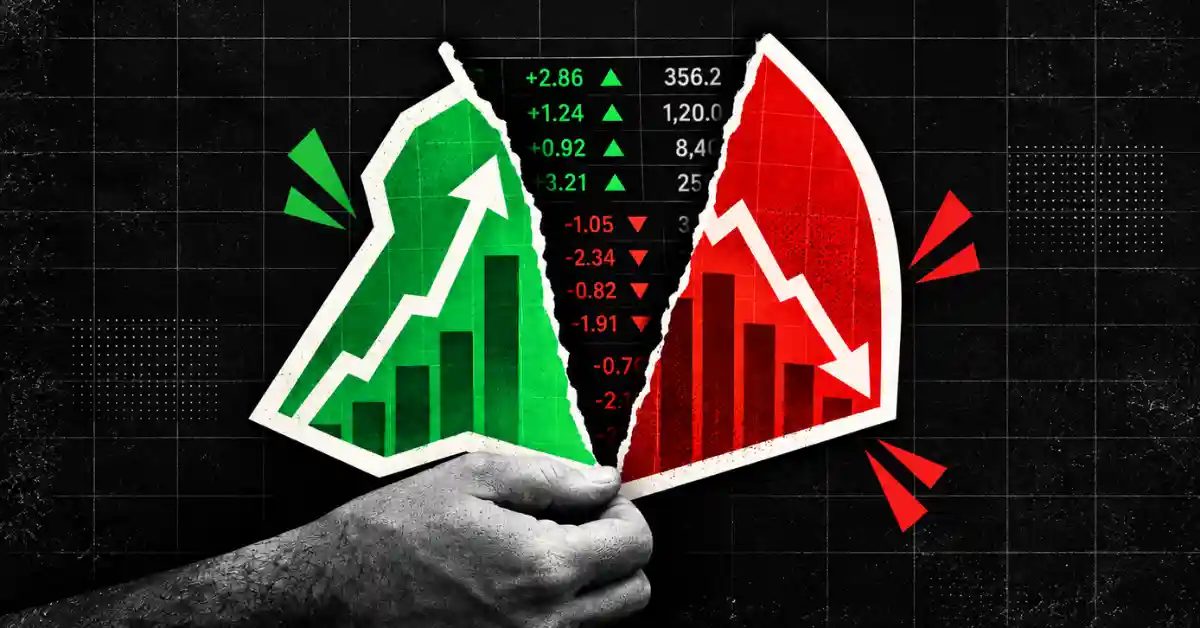
Wall Street’s AI trade lost its footing last week after the midterm election. The Nasdaq ended the week nearly 12% below its October record, officially putting it in correction territory. Meanwhile, the S&P 500 recorded its steepest one-day decline last week since April 2025.
In pre-market trading on Monday, SPDR S&P 500 ETF (SPY) was up 0.31%, and the Nasdaq-100 tracking Invesco QQQ Trust (QQQ) moved 1.4% higher. However, the SPDR Dow Jones Industrial Average ETF (DIA) dipped around 0.40%, and retail sentiment around SPY on Stocktwits improved to ‘neutral’ from ‘bearish’ territory over the past day.
This week’s market moves will showcase whether the selloff in AI and semiconductor stocks was a temporary shakeout or the start of a deeper retreat. The outcome for markets is likely to depend on the political outlook for data-center construction, whether investor anxiety begins to ease, and whether inflation gives the Federal Reserve room to hold off on raising interest rates.
Here are three charts that show what to watch this week:
Politics Is Picking Winners Inside the AI Trade
The election has begun to separate potential winners and losers within the AI trade. Companies tied to building and powering data centers came under pressure after Democrats won control of Congress, while clean-energy stocks gained ground.
Investors’ concerns center around the fact that AI’s expansion depends on more than chips and computing power. It also requires electricity, land, and regulatory approval to build new facilities. Whether the sell-off worsens or eases this week will depend on signals about whether political and local opposition could make data-center projects harder to develop.
Meanwhile, clean-energy companies could benefit if investors expect a Democratic-led Congress to support more renewable-energy development.
Vertiv’s (VRT) sell-off last week offers a useful test of whether the recent selling reflects business concerns or a broader shift in investor sentiment. The data-center equipment maker reported strong results and raised its forecast last month. However, last week, the stock fell with no company-specific news to explain the decline. Peers including Eaton (ETN) and nVent (NVT) also fell.
This week’s results from CoreWeave (CRWV), Applied Materials (AMAT) and Cisco (CSCO) will also offer another read on customer demand and spending across the AI infrastructure industry.
The VIX Shows Whether Investors Are Worried Or Panicking
Wall Street’s fear gauge has climbed to its highest level since April, but its latest reading points to anxiety rather than outright panic.
The Cboe Volatility Index (VIX) measures the market’s expectation of stock-market volatility over the next 30 days. Readings above 20 generally signal elevated concern, while moves above 30 are often associated with more severe market stress. The index closed Friday near 25.5.
VIX’s comparison with its three-month counterpart showed a ratio of 1.0, which signals that near-term corn is elevated. However, it’s below the roughly 1.1 reached during earlier bouts of market stress this year. Similar spikes in volatility have often been followed by market gains, although that pattern does not guarantee a recovery this time.
This week, a move back below 20 would suggest market anxiety is easing. A climb above 30 would point to more severe stress and raise the risk of further volatility-driven selling.
As for the VIX ratio, a move above 1.1 would indicate that concern about an immediate selloff is intensifying. Tuesday’s inflation report could be a catalyst in either direction. A hotter reading could push volatility higher, while a cooler one could help it recede.
Inflation Report Could Shift December Fed Rate Expectations
The U.S. Consumer Price Index (CPI) report is scheduled to come out on Tuesday and could help determine whether the Federal Reserve faces more pressure to raise interest rates in December. Economists polled by Reuters expect consumer prices to have risen 0.3% in October.
Following Friday’s strong jobs report, traders have priced in roughly an 80% chance of a quarter-point rate hike at the Fed’s Dec. 8-9 meeting, according to CME Group’s FedWatch data.
Two competing signals are shaping the outlook. Oil prices climbed in October but fell last week to about $98 a barrel. The midterm election results raised hopes that the Iran war could ease. A sustained decline in oil prices would help reduce inflationary pressure.
Bond yields, however, suggest investors are still preparing for tighter monetary policy. The two-year Treasury yield, which is particularly sensitive to expectations for Fed policy, remains about half a percentage point above the upper end of the Fed’s 4.00% target range.
Interest rates matter especially for AI stocks. Higher borrowing costs make it more expensive to finance data-center construction, while also reducing the present value investors assign to companies’ expected future earnings.