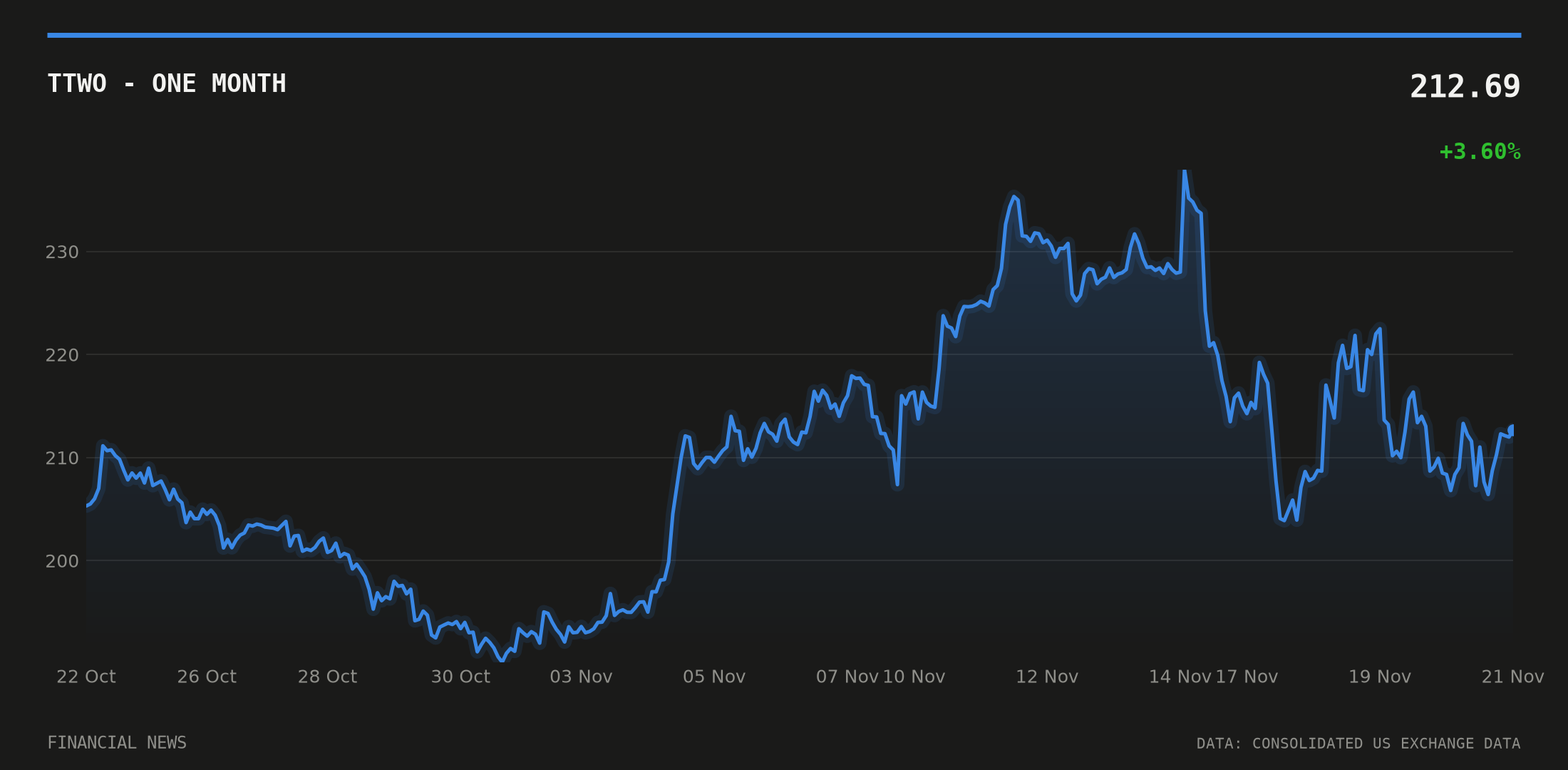
Take-Two Interactive Software (NASDAQ: TTWO) put a number on Grand Theft Auto VI’s launch weekend, but which number depends on who is counting. The GTA VI sales figures circulating since the game went on sale on 19 November 2026 range from a widely reported $2.36bn to a company-confirmed $3.79bn.
Take-Two’s own filing with the US Securities and Exchange Commission puts day-one retail sales at $3.79bn from 32.5 million units, a figure that includes pre-release orders alongside launch-day purchases, according to an exhibit filed with the SEC.
GTA VI sales figures: filing versus estimate
The lower $2.36bn figure comes from Sensor Tower, a market research firm that estimated roughly 24.6 million digital copies were sold in the game’s first 24 hours on sale, Yahoo Finance reported. That estimate covers launch-day digital sales only, a narrower window and channel than Take-Two’s own tally.
Multiple outlets flagged the Sensor Tower number as an unconfirmed estimate at the time it spread, not a figure verified by Rockstar Games or its parent. Take-Two’s filed figure, by contrast, is the company’s own characterisation of “Day One Retail Sales” and covers a longer selling period, which explains most of the roughly 60% gap between the two numbers. Kotaku, citing the same filing, reported the 32.5 million pre-release unit count that underpins the larger figure.
Either number dwarfs the franchise’s last comparable launch. GTA V took in roughly $800m on its first day in 2013, according to Tech Xplore, against GTA VI’s $3.79bn haul 13 years later. The new title arrives on top of a franchise that has sold more than 470 million units to date, with GTA V alone accounting for over 230 million of those.
A record launch, still a loss-making company
None of the launch revenue has yet touched Take-Two’s audited accounts. The company has posted a GAAP net loss in every quarter since the three months to June 2024, a run of seven consecutive quarters through to the period ended 30 September 2026, when it reported a loss of $54.0m, according to its most recent 10-Q. Losses over that run ranged from $11.9m to $365.5m a quarter, alongside quarterly revenue that climbed from $1.34bn to $1.77bn.
Retail sales figures, whichever version is used, are gross bookings rather than revenue recognised under US accounting rules. How much of the $3.79bn flows through to reported sales – and over what period – will not be clear until Take-Two next reports results.
Shares react, short interest stays contained
Take-Two shares closed at $212.40, up 2.29% on the day and 9.83% over the prior 20 trading sessions, with volume running at 2.74 times the 20-day average. The stock has traded between $191.99 and $237.96 over that stretch.
Daily short-sale volume on TTWO ran between roughly 0.47 and 0.69 of total volume across the ten sessions bracketing the launch, FINRA data show, a range that does not point to the kind of short-covering spike sometimes associated with a surprise rally.
What the sales numbers mean for the stock
Some analysts have floated price-target increases implying roughly 40% upside for Take-Two shares on the back of the launch, a framing that both Nasdaq and the Motley Fool examined rather than endorsed, in reporting published the same day. The question those pieces raised – whether a bookings headline justifies that kind of re-rating before any of it shows up in reported earnings – remains open.
Take-Two’s next scheduled quarterly filing will be the first opportunity to see how much of the launch weekend converts into recognised revenue, and whether it is enough to break the company’s run of GAAP losses.
This article is for information only and is not investment advice or a recommendation to buy or sell any asset. Markets move quickly; figures are correct as sourced at the time of writing. Always do your own research before making financial decisions.