
They are to compensate investors who bought TerraUSD on promises they admitted were fradulent
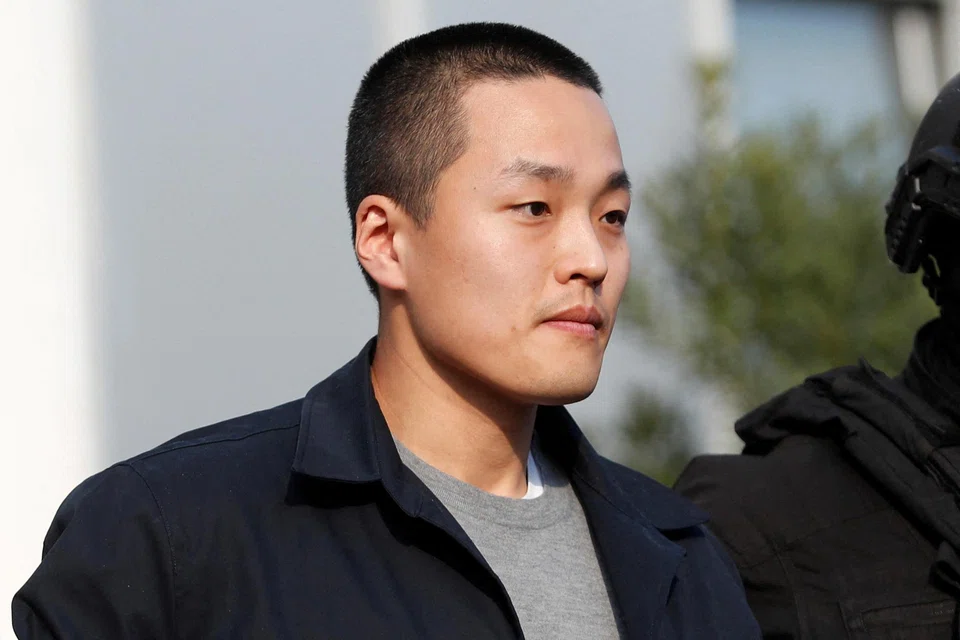
[SINGAPORE] Collapsed cryptocurrency firm Terraform Labs and its co-founder Do Kwon have been ordered to pay about US$1.3 million to investors who lost money in the 2022 collapse of stablecoin TerraUSD.
In a ruling issued on Wednesday (Nov 4) by the Singapore International Commercial Court (SICC), international judge Anselmo Reyes ordered the defendants to pay the sum in damages to 31 investors.
The ruling covers 28 investors in the third round of the representative action, in which 275 claimants are represented. It also settles damages for three claimants from the second round.
About US$986,000 was awarded to 27 of the 28 third-round claimants. The award for the 28th claimant, David Francis Egan, has yet to be set. The court has asked the parties to agree on a figure, and failing that, to submit competing figures within 14 days.
The three second-round claimants were awarded a combined US$269,898.
The defendants – Terraform Labs, Do Kwon and Luna Foundation Guard – had conceded that their statements about UST’s stability, its peg to the US dollar and the safety of its Anchor savings product were false and fraudulent.
Powering Asean's Future 2026
ACCESS THE INSIGHTS
The dispute was whether each investor relied on them, and how much each lost.
Reyes found that all 28 had relied on at least one of the false statements, including that UST would always hold its US$1 peg through an algorithm, and that its Anchor savings product guaranteed investors’ principal.
Cut-off date
Damages were generally limited to losses up to 12.01 am UTC on May 12, 2022. By then, UST had failed to hold its peg for four consecutive days, leaving defendants’ statements with no meaningful content that could be relied upon, Reyes said.
SEE ALSO
Singapore court raises damages payout for investors burned by Do Kwon’s Terraform collapse
TerraUSD creator Do Kwon sentenced to 15 years over US$40 billion crypto collapse
Investors who kept holding in the hope of a recovery were not relying on the statements, he added. Losses are valued using a cut-off price of US$0.60485 per UST token, which the Court of Appeal set in March.
The largest award of US$422,722.52 in the latest ruling went to Litvin Nikita Sergeevich, who had claimed US$453,410.54.
His cut-off was extended because he was travelling without the hardware wallet needed to access some of his tokens, and others were locked on a platform that released them in stages.
Investor Thomas Yuan Fang was awarded US$157,186.90 against a claim of US$293,760.47.
The smallest award was US$2,229.58.
Two other claimants also won later cut-offs: one because he was away without his hardware wallet, and the other because she was on a road trip without Internet access.
Three had their cut-offs brought forward to May 11, 2022, after selling large portions of their holdings – conduct the court said was inconsistent with continued belief in the statements.
The court also held that reliance on the Anchor “principal-guaranteed” statement alone can support a claim, as protecting principal implied that UST itself was stable.
No extra damages for distress
Claims for aggravated damages for emotional distress were refused, including those from Christian Denk, Mike Olech and Laura Jane Hewitt, for lack of medical evidence linking their conditions to the losses.
Interest of 5.33 per cent a year will run from each claimant’s cut-off time, and from the date of judgment until payment.
The court rejected arguments that a Mareva injunction deposit, or limits under Terraform’s Chapter 11 liquidation plan in the US, should stop interest from accruing.
For the second round, the court awarded costs of about S$1.5 million, after cutting the S$1.9 million sought by 20 per cent. It cited late disclosure of records and the time spent on cut-off arguments that largely failed.
Costs for the third round will be decided later.
The case is the first representative action heard by the SICC. The Court of Appeal ruled on the first round in March, and in June the second round produced awards of more than US$3 million to 40 investors.
Kwon was sentenced in the US to 15 years in prison for defrauding investors.
Lawyers from Drew & Napier, Mahesh Rai, Jonathan Yong, Samuel Soo and Daniel Loh, acted for the claimants.
Lawyers from WongPartnership, Tan Chee Meng, Paul Loy, Samuel Navindran, Adelle Yii and Lee Jiayi acted for Terraform and Luna Foundation Group.
Decoding Asia newsletter: your guide to navigating Asia in a new global order. Sign up here to get Decoding Asia newsletter. Delivered to your inbox. Free.
Copyright SPH Media. All rights reserved.
TRENDING NOW
Analysts cut DBS target price on lower 2027 earnings, but see buying opportunity after share price slide
China Investment Corp, PGIM’s 50% stake in Nex mall up for sale; asking about S$1.2 billion
Nvidia CEO Jensen Huang drops from world’s top 10 richest after chips sell-off
OCBC wealth clients turn defensive amid market volatility as Q3 profit rises 3%