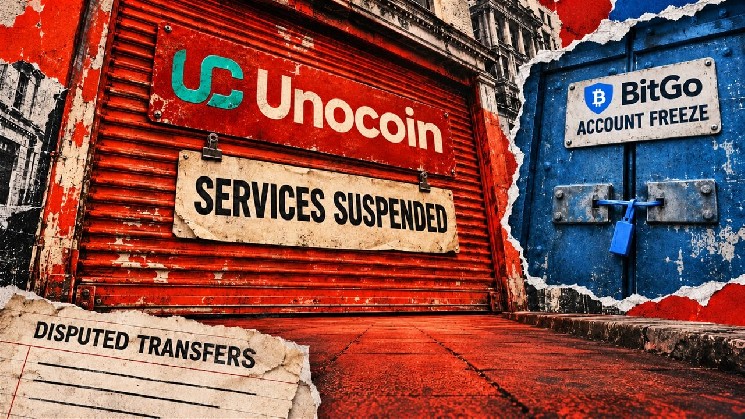
Crypto exchange Unocoin said on Nov. 13 that disputed wallet transfers were signed and broadcast outside BitGo, while the freeze on its BitGo enterprise account had worked so far.
The exchange suspended all services on Nov. 9 after detecting further unauthorized activity. It had requested freezes on its enterprise accounts at BitGo and Fireblocks after initially detecting the activity on Nov. 6.
In its incident update, Unocoin said a backup mechanism designed to preserve access to funds if BitGo became unavailable appeared to have been exploited. It is still investigating how that mechanism was used, cryptocurrency losses, and potential information exposure.
Know when your
coins move
Two routes to a wallet signature
BitGo's wallet documentation describes three keys: the user key, backup key, and BitGo key. Normal transactions use the user and BitGo keys to meet a two-of-three signing requirement. The backup key can instead pair with either of the other two keys.
Pairing the backup key with the user key provides a signing route that does not require BitGo's key, and the two-of-three requirement still applies in that recovery arrangement.
What changes is the pair of keys used to satisfy it: the user and backup keys replace the usual user-and-provider combination, leaving BitGo outside that signing process.
BitGo notes that limit in its withdrawal-policy documentation, saying that those policies apply only to transactions involving BitGo. Recovery transactions using the user and backup keys bypass the policies configured with the provider.
This recovery capability preserves access when the provider is unavailable and helps explain why an account freeze cannot be treated as a blanket restriction on every transaction the wallet's keys can sign.
Unocoin reported identifying outgoing transactions on Nov. 12 from an Ethereum address within its BitGo wallet infrastructure used to fund ERC-20 tokens. Its Nov. 13 explanation attributes the disputed activity to external signing, while the suspected misuse of backup access remains under investigation.
In the Nov. 12 report, Unocoin said more than 90% of customer cryptocurrency funds were maintained in cold storage. It was still establishing the complete status of holdings and potential exposure, so that statement does not settle the loss assessment.
Unocoin's latest update said work to restore services continued. Unresolved questions include how the suspected recovery path was accessed, what losses or information exposure resulted, and when services can resume.