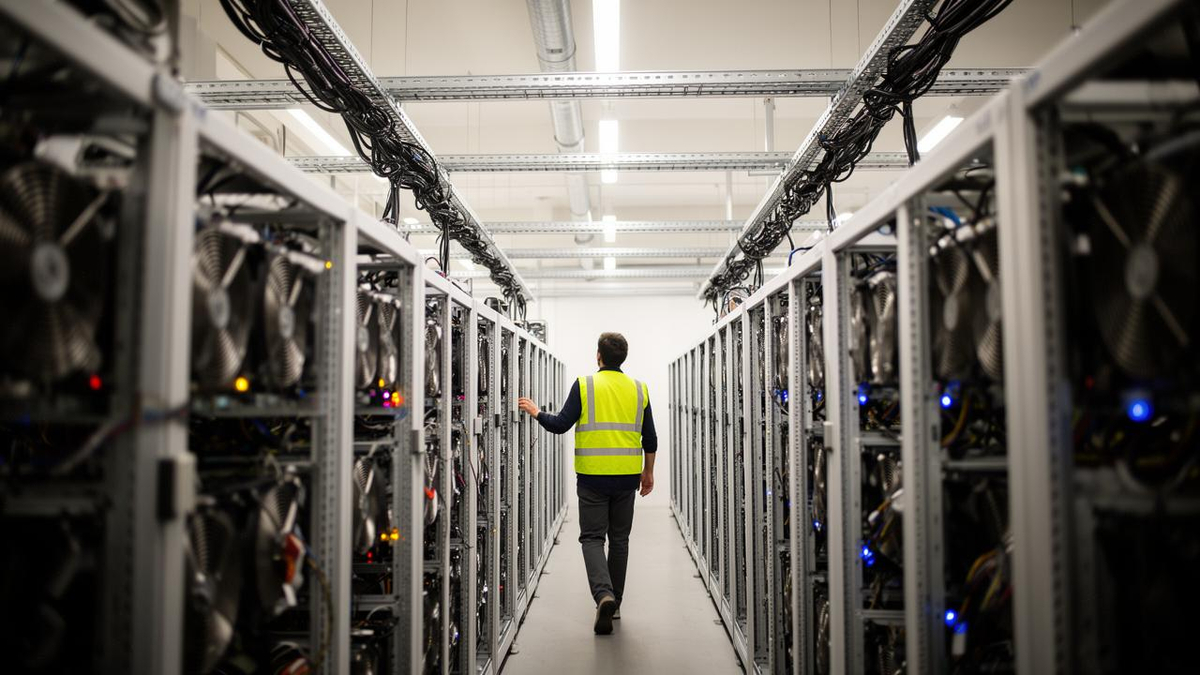
Two major Bitcoin mining companies disclosed substantial cryptocurrency sales in their third quarter earnings reports Wednesday, revealing sharply different strategies for how each firm is managing its holdings.
Why Riot Platforms is selling off its Bitcoin reserves
Riot Platforms sold 10,599 Bitcoin for approximately $751.5 million during the third quarter, accounting for more than half of the 20,264 Bitcoin it has sold so far in 2026. That selling has generated nearly $1.5 billion for the company over the first nine months of the year.
The sales have dramatically reduced Riot’s reserves, which fell to just 2,418 coins by the end of September, down from 18,005 at the start of the year. Rather than holding onto its mined Bitcoin as a long term treasury asset, Riot is directing the proceeds toward building out infrastructure for artificial intelligence computing.
Riot’s filing indicates this pattern is likely to continue, with the company stating it expects to sell substantially all newly mined Bitcoin going forward to finance development and operating expenses rather than rebuilding a sizable reserve.
Why Hut 8 took a different approach to its holdings
Hut 8 pursued a noticeably different path. The company sold approximately 954 Bitcoin for $74.8 million during the third quarter, followed by another 2,148 Bitcoin sold for $175.4 million in October, bringing its combined sales across both periods to roughly $250.2 million.
Rather than funding infrastructure buildout, Hut 8 used those proceeds specifically to finance stock repurchases. The company still held 16,787 Bitcoin across its consolidated operations by the end of September, valued at approximately $1.4 billion, including holdings tied to its majority owned, Trump family backed American Bitcoin subsidiary.
Hut 8 also secured a $1.07 billion revolving credit facility and expanded its stock repurchase authorization to $1 billion following the quarter’s end, signaling continued confidence in returning capital to shareholders even while holding onto the bulk of its position.
How investors reacted to each company’s results
Riot reported third quarter revenue of $181.4 million, up slightly from $180.2 million a year earlier. Mining revenue actually declined to $116 million from $160.8 million despite production rising 16% to 1,637 Bitcoin, while data center revenue reached $18.4 million. Net income came in around $4 million, down sharply from $104.5 million a year earlier.
Hut 8 reported revenue of $71.1 million, down from $83.5 million the prior year, though net income attributable to the company jumped to $131.1 million from $50.1 million, boosted largely by a noncash gain tied to rising Bitcoin prices rather than core operating performance.
The market reacted very differently to each report. Riot shares rose more than 12% to recently trade around $15.75, while Hut 8 shares plunged more than 21% to around $50.06, suggesting investors favored Riot’s growth focused strategy over Hut 8’s buyback centered approach this quarter.
What these sales signal for the mining industry
Riot also announced a 15 year lease covering 910 megawatts of computing capacity at its Corsicana, Texas facility, a deal valued at approximately $28 billion over its initial term. Combined with other agreements, the company now has roughly $38 billion in contracted data center revenue.
Hut 8 highlighted its own infrastructure progress as well, including the commercialization of its Beacon Point campus and the advancement of 1,300 megawatts of energy capacity into exclusive development discussions, mirroring the broader shift toward AI infrastructure already underway across the Bitcoin mining sector.
Together, these two reports suggest that major mining companies are increasingly treating their coin reserves as a funding source for broader business transformation rather than as a store of value to be held indefinitely, a shift that could reshape how the entire industry approaches its holdings going forward.
Industry analysts tracking the mining sector say these divergent strategies reflect a broader debate within the space about whether companies should prioritize long term balance sheet strength through coin accumulation or redeploy capital more aggressively into growth opportunities tied to artificial intelligence infrastructure demand.
Both companies continue mining operations alongside these infrastructure pivots, meaning the sales disclosed this quarter represent a shift in how proceeds get allocated rather than a complete departure from cryptocurrency mining as a core business activity. How other miners respond to this earnings season may offer further clues about where the broader industry is headed next.
Source: Bitcoin News