Key takeaways
- XRP ETF inflows stall despite Ripple's institutional expansion
- Five spot funds have attracted $1.81 billion cumulatively
- Ripple partnerships do not automatically generate XRP buying
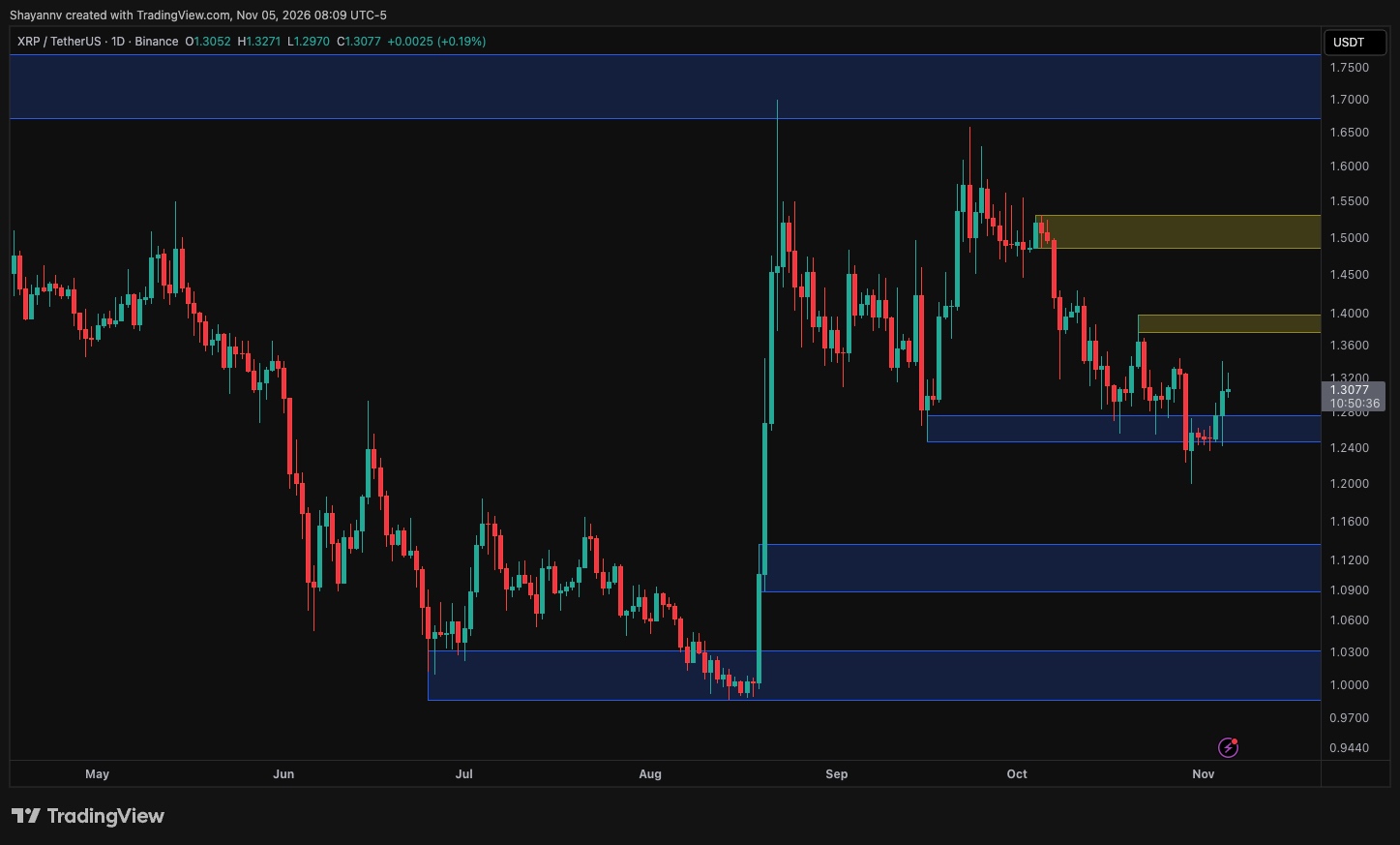
US spot XRP exchange-traded funds are showing little fresh investment activity despite Ripple securing major institutional partnerships and expanding its regulated financial infrastructure.
The five tracked XRP ETFs recorded zero net inflows on November 3, following approximately $530,000 in withdrawals on November 2. Preliminary November 4 figures also showed no net creations or redemptions among reporting funds, according to CryptoETF Today's flow tracker.
XRP ETF Demand Stalls Near $1.81 Billion
Cumulative net inflows into US spot XRP ETFs remain near $1.81 billion, reflecting substantial investment since the first products launched in November 2025.
However, recent daily activity has weakened considerably. The funds recorded approximately $496,000 in combined outflows on October 30, followed by another $530,000 in withdrawals on November 2.
November 3 produced no net inflows, even as approximately $14 million worth of ETF shares changed hands. This distinction matters because secondary-market trading volume does not necessarily require funds to create or redeem shares.
The last notable positive session came October 29, when XRP ETFs attracted approximately $8.4 million.
Combined net assets stood around $1.46 billion on November 3, well below cumulative investor contributions. Recent estimates placed unrealized losses near $440 million using reconstructed acquisition costs rather than official shareholder-level profit-and-loss data.
Ripple's Institutional Business Keeps Expanding
The ETF slowdown comes as Ripple strengthens relationships across banking, custody, stablecoins and institutional payments.
In its October 28 announcement, Ripple said its products supported more than 1,700 institutional and corporate customers. The company also reported threefold growth in customers using multiple Ripple solutions.
Its expanded partnership with BNY introduced institutional custody support for XRP and RLUSD, while opening opportunities in tokenized trade finance.
Meanwhile, Robinhood's planned integration could bring RLUSD to its retail application later in 2026. Ripple also partnered with Coinbase to expand stablecoin access through its trading and institutional platforms.
These developments build on Ripple's US banking approval, which strengthens the regulatory foundation for its institutional services.
However, product adoption and corporate revenue are not equivalent to demand for XRP itself.
Why Ripple's Growth Isn't Translating Into ETF Buying
Ripple's expanding business operates across several products that do not necessarily require institutions to purchase XRP directly.
RLUSD provides dollar-denominated settlement, while Ripple's custody, treasury and brokerage infrastructure can generate commercial activity without creating equivalent demand for the native token.
Even XRPL payment expansion does not guarantee substantial XRP accumulation, particularly when transactions use stablecoins rather than XRP as their settlement asset.
ENRICH your inbox with our best stories
Don’t miss out and join our newsletter to get the latest,
well-curated news from the crypto world!
Marcus Hale
Marcus Hale is a crypto and financial markets writer covering Bitcoin, Ethereum, digital assets, regulation, ETFs, and institutional adoption. His work focuses on market-moving developments, investor trends, and the broader forces shaping the crypto economy.
https://coinpaper.com/38371/xrp-et-fs-record-zero-inflows-as-ripple-expands-banking-business-with-bny-coinbase-and-robinhood
Read more about