Which topics should we dive deeper into?
Select what genuinely interests you. Your picks feed directly into our editorial planning.
Crypto news that's actually worth your time.
Weekly. 60 seconds. Carefully curated by our editors: no hype, no promo flood, no spam.
Zcash is rallying just ahead of the largest network upgrade in its history, and the Zcash Foundation has hardened its node software for the occasion in seven places. ZEC holders do not need to move anything themselves, but they should update their wallet app and move any old Sprout balances before block 3,543,405. Anyone running their own node needs Zebra 7.0.0; otherwise they will end up on a different blockchain after activation.
Zcash price at $1,231: up 8.6 percent about 50 hours before NU7
Zcash (ZEC) traded at $1,230.91 at 0:48 a.m. German time on November 4, 2026, or roughly 1,099 euros. That is a gain of 8.6 percent in 24 hours, the strongest showing among the 25 largest cryptocurrencies according to CoinGecko. The daily low was $1,122.37 and the daily high $1,243.03. Despite the jump, ZEC is still down 6.0 percent over seven days. With a market capitalisation of around $20.9 billion, Zcash ranks tenth in the market.
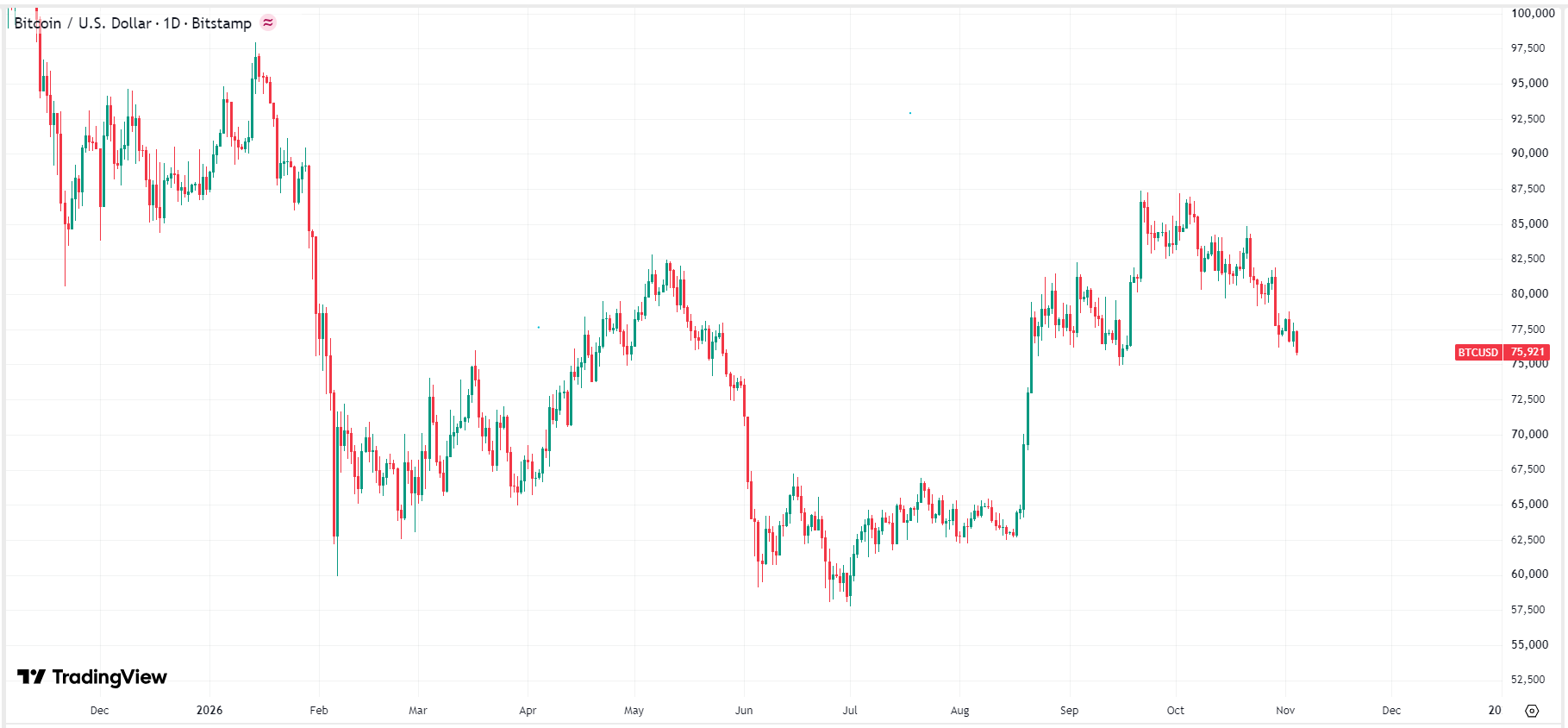
The broader market moved far less over the same period. Bitcoin rose 1.3 percent to $77,678 and Ether 1.5 percent to $2,282. Monero, the other large privacy coin, gained 4.1 percent. There is no single documented trigger for the jump in ZEC. The day before, the price had fallen by around 11 percent after a large leveraged position was unwound and the dispute over funding for Zcash Community Grants escalated; the background is in our report on the ZCG grants dispute from November 3. What is certain is the date the market is heading towards: the activation of Network Upgrade 7, or NU7 for short.
Zebra 7.0.0: the first stable node software for NU7 on mainnet
A node is a computer that stores the full blockchain, verifies every transaction itself and passes new blocks on to other participants. Zcash has had two programs for this for years: the older zcashd, which grew out of the Bitcoin code, and Zebra, a version written from scratch in the Rust programming language by the Zcash Foundation. NU7 supports only Zebra.
The Zcash Foundation released Zebra 7.0.0 on October 22, 2026 and describes it as the first stable release with NU7 support on mainnet. Activation is set at block height 3,543,405. The foundation states explicitly that all mainnet node operators must upgrade before this block to remain on the consensus blockchain. After activation, NU7 nodes disconnect from older versions, and nodes that have not been updated will follow a different chain.
Two details matter mainly for operators. On first start, Zebra 7.0.0 converts its own database to a new format, from version 28 to version 29; rolling back to Zebra 6.x afterwards requires a full resync. The foundation will also support this release for only eight weeks instead of the usual twelve, so the upgrade will soon be followed by the next mandatory update. The trade site crypto.news revisited the list of fixes on November 3 and also pointed to the alpha release 7.1.0-alpha.0 of October 31, which the developers say fixes delays in mining.
Seven Zebra security vulnerabilities: the Zcash Foundation rates five as high
Alongside NU7, Zebra 7.0.0 closes seven reported security vulnerabilities, known as security advisories. The foundation rates five of them as high severity and two as medium. According to its description, none of the flaws allowed access to other people's coins. The issue was a different one: a hostile participant in the network could crash a Zebra node, slow it down or cut it off from honest peers.
- Forged checkpoint blocks (high, two cases): A peer, meaning another connected node, could supply forged block contents during the initial sync. Zebra only downloaded the genuine block again after a restart.
- Invalid scripts without penalty (high): Transactions with faulty transparent scripts kept verification busy without the sender being banned.
- Quadratic cost of signature hashes (high): A single 2-megabyte transaction with tens of thousands of inputs could tie up a node's CPU for minutes.
- Mempool verification (high): The mempool is the waiting room for transactions that have not yet been confirmed. A crafted transaction cost ten seconds or more of computing time there, and could be repeated at will. The flaw was only introduced with Zebra 6.4.0.
- Crash on disconnect (medium): Zebra could crash when disconnecting a busy peer.
- Honest peers banned (medium): By deliberately spreading transactions with a lock time set slightly too early, an attacker could get a node to ban its best connections.
For ZEC holders who trade through an exchange or a wallet app, this is an indirect question. Their coins do not sit on a Zebra node, but exchanges, block explorers and wallet servers do depend on one. A node that stalls shortly before or after activation delays deposits and withdrawals. That is why the timing of the fixes matters.
Block 3,543,405: when NU7 activates based on block times
NU7 has no fixed clock time, because activation is tied to a block height. The Zcash Foundation gives its plan as "around November 5". At 0:48 a.m. German time on November 4, the Zcash blockchain stood at block 3,540,980. That leaves 2,425 blocks until activation. In the preceding 24 hours, 1,145 blocks were produced, an average of one every 75.5 seconds.
If that pace holds, block 3,543,405 will arrive in about 50.8 hours, around 3:40 a.m. German time on November 6. At the target of 75 seconds per block, the result is about 3:20 a.m. If miners' hash rate fluctuates, the time shifts by a few minutes to a few hours. cryptoticker.io compiled this analysis itself on November 4, 2026, based on public block data from the Zcash blockchain covering 1,145 checked blocks. There is one inconsistency on the official upgrade page at z.cash: it still says the activation height has not been set, while the Zcash Foundation names height 3,543,405 in its release announcement.
With NU7, the interval between two blocks falls from 75 to 25 seconds under ZIP 218. ZIP stands for Zcash Improvement Proposal, the process used to describe changes to the protocol. Daily issuance of new ZEC stays the same, because the reward per block is divided by three. According to the foundation, the four-year halving cycle and the cap of 21 million ZEC are also unchanged. A detailed calculation of the new block interval is in our article from October 28.
Network Sustainability Mechanism: 60 percent of fees go into a reserve
The second major change concerns fees. Under ZIP 235, from NU7 onwards 60 percent of the transaction fees in a block are taken out of circulation and placed in a reserve. Miners keep 40 percent. Later blocks are meant to pay out a small, predictable share from this reserve on top of the normal reward; on mainnet, according to ZIP 259, this begins only at block height 8,939,664. The foundation justifies this with the long horizon: the block reward shrinks with every halving, and at some point network security has to be paid for through fees.
There are also new per-block limits for transactions in the shielded pools Orchard, Ironwood and Sapling. In Zcash, a pool is a separate area with its own encryption in which balances are held. According to the Zcash Foundation, possible throughput in the Orchard pool rises from 2.9 to 6.6 transactions per second. At the same time, the amount of data an attacker could at worst push onto light wallets through spam falls by about 37 percent. Light wallets are smartphone apps that do not load the entire blockchain, only the data relevant to them.
Zodl wallet 3.19.0: the app update needed before November 5
For retail investors, the wallet is what matters most. The provider of the Zodl wallet app, formerly known as Zashi, said on X on November 3 that users must update to version 3.19.0 before November 5 to keep using the app after the upgrade. The trade site Tron Weekly quotes Zodl's post verbatim. Other wallets generally follow through their normal update channels; nobody is forced to move their coins.
Your balance itself does not change with NU7. Your seed phrase, the sequence of words from which all the wallet's keys can be restored, remains valid. If you keep your ZEC on a hardware wallet, you will usually need a firmware or app update there once the manufacturer releases it; our hardware wallet comparison shows which devices support Zcash with shielded addresses. An update from an unknown source, a link in a direct message or a supposed support email is a well-known attack vector around upgrades. Updates come only from the official app store or the manufacturer's own website.
Sprout pool and version 4 transactions: which balances NU7 freezes
With NU7, transactions in the old version 4 format become invalid, as described in ZIP 2003 and ZIP 259. Versions 5 and 6 remain valid. This hits the oldest shielded pool, Sprout. Transfers out of Sprout only work in the version 4 format. Anyone who still has ZEC there will no longer be able to move it after activation. The Zcash Foundation states that such balances become "unspendable".
This mainly affects users who have not touched their wallet for years. Modern wallets such as Zodl do not use Sprout. If you own an old desktop wallet from Zcash's early days, you should transfer the balance to a newer pool or a current wallet before block 3,543,405. How to do that, and how to recognise Sprout addresses, is explained in our guide to the Sprout pool.
Exchange pauses and leverage: why the upgrade date matters for traders
Exchanges usually suspend deposits and withdrawals of a coin for a few hours during network upgrades, until their own nodes are running the new version and the first blocks are confirmed. By the time of writing, we had not found a specific announcement on NU7 from Binance, Kraken or Coinbase. If you want to move ZEC between an exchange and a wallet during the night of November 6, you are better off building in a buffer and checking your exchange's status page beforehand.
This matters more for leveraged trading than for the spot market. With a leveraged contract, the position is closed by force as soon as losses eat up the posted collateral; this is called liquidation. If you cannot top up with ZEC during that window because deposits are paused, the only option left is collateral in another form. The previous day showed how fast this can happen: the slide to the daily low set off a series of forced sales that the price only recovered over the course of the day.
Buying ZEC in Europe: MiCA exchanges, holding period and custody before the upgrade
For investors in Germany, NU7 changes nothing about how to buy. You still buy ZEC through exchanges licensed under the EU's MiCA regulation. MiCA stands for Markets in Crypto-Assets and has governed since the end of 2024 which providers may offer crypto assets in the EU. Which platforms list ZEC and what trading costs there is shown in our crypto exchange comparison. In the longer term, a different deadline looms for privacy coins: under the new EU anti-money-laundering rules, providers may no longer hold accounts for coins with obscured transactions from July 2027. That plays no role for NU7 yet.
For tax purposes, the upgrade is not an event. No new coins are created, and a software update is neither a sale nor an exchange. The one-year holding period under Section 23 of the German Income Tax Act continues to run unchanged for your ZEC. Transferring coins from an exchange to your own wallet before the upgrade is not a sale either; you should still record the transfer with date and amount so that the proof of the holding period remains complete later on.
On custody, the usual trade-off applies. On an exchange, the provider takes care of the upgrade, but it also holds the keys. In your own wallet you have full control and have to install the app update yourself. Both are possible ahead of NU7; what matters is that wallet and exchange are up to date before block 3,543,405.
Zcash price levels: $1,122 below, $1,243 above
The next level to the upside is the daily high at $1,243.03. Above that lies the zone around $1,279, which we described as resistance on November 3. To the downside, the round $1,200 mark is the first support; according to our November 3 report, a large stop-loss was triggered there the day before. Below that comes the daily low at $1,122.37. If the price falls below it, the entire jump of the past 24 hours will have been given back.
A major upgrade can cut both ways. If activation goes through without outages, a technical risk that many traders price in beforehand disappears. If exchanges stay frozen for longer or part of the nodes split off, uncertainty rises. Neither can be established in advance, which is why tight positions with high leverage are among the riskiest options in ZEC over the next 50 hours.
Zcash upgrade countdown: about 50 hours left until block 3,543,405
- Update your wallet: Install your wallet app's update before November 5, at least version 3.19.0 for Zodl. If you want to keep ZEC in self-custody for the long term, the hardware wallet comparison lists devices with Zcash support.
- Plan transfers: Do not move ZEC between exchange and wallet during the night of November 6; do it beforehand or a few hours after activation. You can find an exchange with MiCA authorisation for ZEC in the crypto exchange comparison.
- Document transfers: Record every transfer with date and amount so that the holding period remains provable. The programs in our comparison of crypto tax tools can help.
(As of November 4, 2026. This article is not investment advice. Prices and fee structures change; check the terms with the provider before you buy.)
Frequently asked questions about Zcash NU7
NU7 activates at block height 3,543,405, around November 5, 2026 according to the Zcash Foundation. Based on the block pace on November 4, this block will arrive on November 6 between about 3:20 and 3:40 a.m. German time.
No, ZEC in modern wallets and on exchanges remains valid. Only balances in the old Sprout pool should be transferred before block 3,543,405, because they can no longer be spent afterwards.
Zebra 7.0.0 closes seven security advisories, five rated high and two medium severity. They concerned the availability of Zcash nodes, for example through forged checkpoint blocks or expensive signature checks, not access to other people's coins.
Zcash rose 8.6 percent in 24 hours to $1,230.91, as of November 4, 2026. There is no single documented trigger; the rise followed a drop of around 11 percent the previous day and comes in the final days before the NU7 upgrade.
No, the upgrade creates no new coins and is not a sale. The one-year holding period under Section 23 of the German Income Tax Act continues to run unchanged for Zcash.
Transparency note: This article was produced with the assistance of artificial intelligence and reviewed by our editorial team before publication. All figures and claims were checked against the primary sources linked in the text. The feature image was generated with AI.
Related articles
- Zcash falls 7.4 percent ahead of block 3,543,405, the NU7 cut-off for old Sprout funds
- Zcash NU7 cuts the block time to 25 seconds: what changes for your coins
- Zcash falls 10.5 percent as block 3,543,405 enters the NU7 document: why the date points to November 6
- Zcash price slides from $1,315 to $1,185 before the NU7 decision on October 20: the level that decides
- $1,332: Zcash is the only one of the ten largest coins with a weekly gain
Which topics should we dive deeper into?
Select what genuinely interests you. Your picks feed directly into our editorial planning.
Crypto news that's actually worth your time.
Weekly. 60 seconds. Carefully curated by our editors: no hype, no promo flood, no spam.
October 22, 2026 1:20 AM
Zcash NU7: developers name block 3,543,405, yet the activation height is in no document
Developers have agreed on block 3,543,405 as the NU7 activation height, according to Cointelegraph, but the Zcash upgrade page still lists it as not set on October 21. Our count shows all six NU7 ZIPs carry the status Draft, while ZEC trades at $1,277 and 12.7 percent above its daily low.
September 23, 2026 4:19 PM
Zcash Sprout Pool: Why You Must Move Old ZEC Before November 5
The NU7 network upgrade is set to remove v4 transactions, and with them the only way to spend ZEC from the old Sprout pool. Affected are those holding a wallet file from 2016 or 2017 with addresses beginning with zc.
September 18, 2026 7:12 PM
Zcash NU7 Upgrade on November 5, 2026: What You Must Do With Your ZEC
Zcash activates the NU7 network upgrade on November 5, 2026, bringing 25-second blocks and the end of v4 transactions. Anyone holding ZEC has nothing to move; action is only needed from those running their own node, indexer or block explorer.
September 5, 2026 4:23 PM
Zcash Vote: Who Is Allowed to Take Part and How You Cast Your Vote
A vote on the scope of the next network upgrade, NU7, has been running at Zcash since 25 August, and who may have a say was settled before it started: a snapshot at mainnet block height 3,459,350 decided it. This piece explains the three conditions your ZEC had to meet on that date, which wallets you vote with until 14 September, and why the result still does not change the protocol.
September 13, 2026 4:30 PM
Zcash Orchard Pool: How to Check Whether Your ZEC Balance Still Needs Migrating
Since the Ironwood upgrade of July 28, 2026, Zcash's old Orchard pool has been sealed, and every shielded balance has to cross into the new pool individually through a turnstile. At the end of August, 470,000 ZEC were still in the old pool. Here is how to check in a few minutes whether your wallet is one of them.
November 3, 2026 7:13 AM
Zcash drops 11 percent as a dispute over ZCG grant money precedes the NU7 upgrade
Zcash falls to around $1,135, and on-chain data show one large buyer losing $5.84 million. Behind the move are the dispute over the $124 million ZCG grant pool and the NU7 upgrade in the early hours of November 6.
August 23, 2026 7:27 AM
Zcash Vote on the Halving: What the August 24 Cut-Off Meant for ZEC Holders
Recap as of September 27, 2026: Zcash had scheduled a coin holder vote from August 25, 2026 on whether to replace the halving with a smooth issuance curve. Only holders of shielded ZEC in the Ironwood pool at the August 24 cut-off were eligible. This article describes the situation before that date.
October 15, 2026 10:25 AM
Zcash drops 13 percent to $1,089, the steepest fall in the top 25
Zcash loses around 13 percent within 24 hours to $1,089.72 and slips below the $1,100 mark. No other of the 25 largest cryptoassets gives up more on the day, while Monero loses just 2.3 percent.
October 5, 2026 1:29 AM
Chainalysis attributes $387 million from the Bitget hack to North Korea: what matters now for investors in Germany
The analytics firm Chainalysis attributes the theft of around $387 million at Bitget to actors with ties to the DPRK and puts the annual total above one billion dollars. What that means for custody, choice of exchange and record-keeping in Germany.
June 5, 2026 3:00 PM
Zcash Crash: ZEC Coin Falls 40% After AI Bug Scare — Here Are the Next Supports
Zcash crashes over 40% as AI-linked bug fears, whale shorts, liquidations, and weak crypto sentiment hit $ZEC.
October 16, 2026 4:44 AM
Zcash holds $1,073 and takes back 14 percent from the low: where does ZEC stand now?
Zcash fell as far as $1,073.55 on 15 October 2026 and trades at around $1,224 again. Between the daily low and the daily high lay 16.6 percent, a range that decides more about leveraged positions, the holding period and custody than the closing level does.
July 10, 2026 3:04 PM
Zcash Surges 8% as the Ironwood Upgrade Reignites Privacy-Coin Hype
Zcash is up more than 8% today and back above $500. Here is what is driving the ZEC rally and where analysts see the price heading next.
August 22, 2026 4:34 PM
BitBox02: Firmware 9.26.5 Closes Three Security Vulnerabilities. What to Check Now
BitBox released firmware 9.26.5 on August 17, 2026, closing three security vulnerabilities in the BitBox02 and BitBox02 Nova. Existing seeds are not affected according to the manufacturer; an update is due anyway, and with unused devices the order matters.
October 25, 2026 3:31 PM
Electrum wallet vulnerable before version 4.8.3: what you can do now
Electrum released version 4.8.3 on October 23, 2026 and closed a flaw that malicious servers had already exploited. It does not harvest your keys; it targets the moment you speed up a stuck transaction.
September 30, 2026 4:15 PM
Zcash today: 2,746 ZEC from the Bitget hack vanish into the Ironwood pool
Wallets from the Bitget break-in pushed 2,746 ZEC into Zcash's Ironwood pool on Wednesday morning, roughly $3.9 million. What the shielding means for tracing, and what applies to your exchange account from July 2027.
September 6, 2026 4:34 AM
MultiversX Supernova of September 10: What EGLD Holders Should Know After the Hard Fork
Recap as of September 27, 2026: MultiversX had scheduled the Supernova hard fork for September 10, 2026 to cut block time from six seconds to 600 milliseconds. Our own query of the MultiversX API on September 27 shows 600 milliseconds. This article describes the situation before the hard fork and what exchange and staking users should have checked beforehand.
December 26, 2025 1:50 PM
Breaking: Trust Wallet Chrome Extension Hack Drains $7M, Full Reimbursements Promised
A supply-chain attack hit Trust Wallet’s Chrome extension, draining $7M from users. Binance’s CZ says all victims will be reimbursed.
June 4, 2026 4:30 PM
Zcash Crash: Why Is ZEC Falling Harder Than the Rest of the Crypto Market?
Zcash price crashes harder than major cryptos as ZEC faces profit-taking, technical uncertainty, and renewed pressure after its recent rally.
June 15, 2026 11:45 AM
Zcash Price Prediction: ZEC Surges 15% as Privacy Coins Lead the Crypto Rebound
Zcash price prediction as ZEC surges 15% in 24 hours, outperforming Bitcoin, Ethereum, Solana, and XRP. Can the privacy coin rally continue?
May 7, 2026 4:48 PM
Zcash Price Prediction: Why is ZEC Up 70% This Week?
Zcash (ZEC) skyrocketed over 70% this week, hitting 2026 highs. What is Multicoin Capital and what is the ZEC price prediction for the coming weeks?
October 20, 2023 9:53 PM
How to Keep Crypto Safe
After the $6.3 billion Binance hack: how to keep crypto safe. Hardware wallets compared, wallet scanners such as MetaMask security alerts, the exchange settings that matter and a seven-step checklist.
November 27, 2024 9:18 AM
Why is Zcash (ZEC) Price UP?
Zcash (ZEC) is showing strong signs of recovery with back-to-back green candles and growing market momentum fueling its bullish run.
September 16, 2026 4:19 AM
Check Your Safe Wallet Modules: How One Module Moved $7.7 Million Without a Signature
On September 15, 2,882 rsETH drained out of a Safe multisig without a single owner signing. An enabled module was to blame, and this is how you check your own wallet in five minutes.
September 13, 2026 10:19 PM
Reporting Duty for Wallet Makers: What Has Applied Since September 11, 2026
Since September 11, 2026, anyone offering a wallet commercially in the EU must report an actively exploited vulnerability within 24 hours and inform the affected users. What Article 14 of the EU Cyber Resilience Act requires, where the limit of interpretation lies, and what you should take from it for your own custody.
January 8, 2026 10:36 PM
Zcash Price Crashed 20% as the Core Developer Team Resigned in January 2026, and Then Rallied
ZEC fell about 20% on 8 January 2026 after the Electric Coin Company team resigned. It slid to about $197 in March, then rallied to above $1,500 by September 2026.
October 26, 2026 12:00 PM
Bitcoin Wallet Bug: Why Speeding Up a Payment Could Drain Your Wallet
A Bitcoin wallet bug let rogue servers swap a real payment for a fake one and trick users into signing it. How the fee bump trap works and how to stay safe.
September 29, 2026 1:33 AM
Zcash falls 8.5 percent as open interest shrinks 13.5 percent: the level that decides
Zcash trades at around $1,464 on September 28, 2026, 8.5 percent below the previous day. Our own measurement of open interest on OKX shows a fall of 13.5 percent in 24 hours, so more leverage unwinding than price loss.
More from CryptoTicker