November 6, 2026
Last week’s record hack of cryptocurrency exchange Binance sent a tremor through crypto banking—not because blockchain technology failed, but because the theft exposed the off-chain human and process vulnerabilities that any institution bridging fiat and digital assets must confront. On November 5, 2026, PYMNTS reported that U.S. banking regulators quietly reached out to banks to check for unusual activity, signaling how deeply this incident is reshaping expectations for business crypto bank accounts, custody, and compliance.
Table of Contents
- What just happened with the Binance heist?
- Why are US regulators contacting banks now?
- Does this affect crypto banking for businesses?
- How can my startup keep crypto assets safe from similar hacks?
- What should DAOs and Web3 companies do differently after this heist?
- Will this attack lead to new crypto banking regulations?
- Key Takeaways
What just happened with the Binance heist?
The Heist at a Glance
In late October 2026, Binance suffered what multiple sources call the largest exchange hack to date; the exact amount stolen remains undisclosed. Attackers did not exploit any blockchain protocol. They compromised off-chain infrastructure—internal systems, privileged credentials, and the human trust layers between the exchange’s hot wallets and operational workflows (PYMNTS, Nov 5, 2026).
Who’s Behind It: TraderTraitor and the Lazarus Group
Blockchain analytics firm Chainalysis attributed the attack to the TraderTraitor group, a cybercriminal organization affiliated with North Korea’s state-sponsored Lazarus Group (reported via PYMNTS citing Bloomberg News/Chainalysis, Nov 5, 2026). This is the same actor behind a string of high-profile crypto heists, consistently using stolen digital assets to fund Pyongyang’s weapons programs. The Binance operation, now their largest, confirms that even a mature, well-resourced exchange remains a target when its process security falls short.
Funds on the Move: Chinese Money-Laundering Networks
Within days of the theft, Chainalysis detected the hackers funneling portions of the stolen funds through Chinese money-laundering networks—a tactic that complicates recovery and heightens sanctions compliance concerns. The movement of illicit crypto through fiat corridors underscores why regulators now view exchange hacks as systemic risks to traditional banking.
Why are US regulators contacting banks now?
The Fed and OCC’s Unusual Queries
Supervisors at the Federal Reserve and the Office of the Comptroller of the Currency reached out to banks in early November 2026 to ask about any unusual activity or service disruptions related to the Binance incident (PYMNTS, Nov 5, 2026). Such proactive, unscheduled checks are rare; they signal that regulators see the heist as a potential trigger for broader financial stability concerns.
What They’re Looking For: Disruptions and Exposure
The queries likely sought to determine whether U.S. banks had direct or indirect exposure to Binance’s fiat on-ramp partners, correspondent accounts, or payment rails. They also aimed to detect spikes in unusual wire transfers, large stablecoin redemptions, or signs that stolen funds were being layered through the banking system. This is Fed crypto banking regulation in action—a clear signal that the boundary between crypto exchanges and the conventional financial system is now a supervisory priority.
No Disruptions, But a Wake-Up Call for All Crypto Banking
At least one bank confirmed there were no service disruptions, and few customer inquiries followed, according to the report. Yet the fact that regulators initiated these checks means crypto banking is now squarely on their radar as a source of contagion risk—not just for consumers, but for payment infrastructure itself.
Does this affect crypto banking for businesses?
Yes, and the effects will be felt most by businesses that use hybrid fiat-crypto accounts. If your company operates a Web3 bank account or uses a crypto banking platform to manage payroll, vendor payments, or treasury, expect deeper due diligence and more frequent compliance attestations. The OCC’s earlier push to open a stablecoin path for crypto banking had already placed these accounts under a compliance lens; the Binance heist will accelerate that trend. Regulators are now likely to ask banks: “Do you know which of your business customers hold crypto, and how are those assets safeguarded?”
Business-focused products such as Business Banking for Web3 & Crypto Companies and Crypto Business Bank Account | IBANs, Cards & Payroll will face the same scrutiny, even when their underlying custody is cleaner than an exchange’s hot wallet. The expectation is shifting from basic onboarding checks to continuous risk monitoring.
How can my startup keep crypto assets safe from similar hacks?
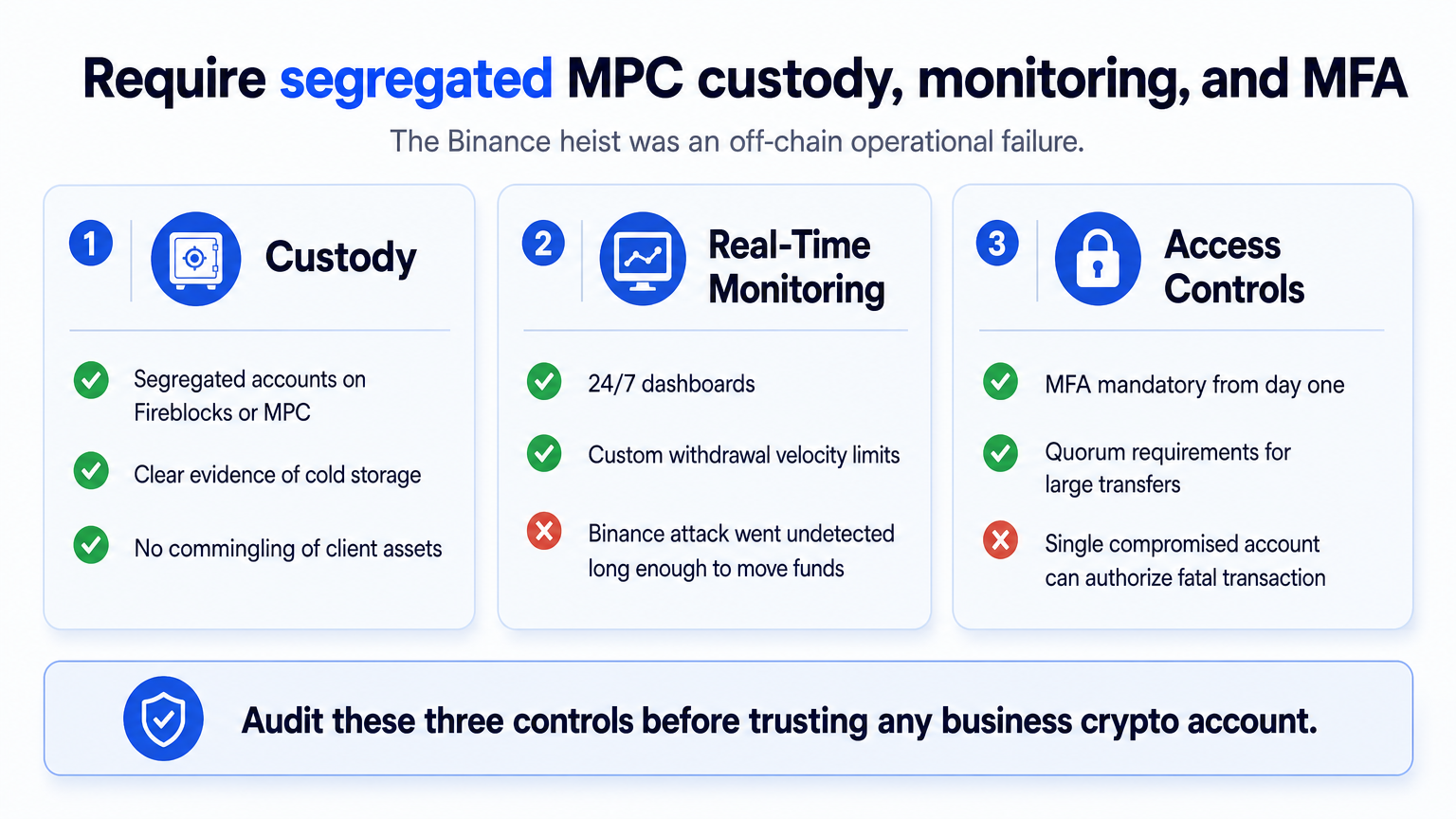
The Binance heist is not a blockchain hack; it’s an off-chain operational failure. That means the defensive playbook for a business crypto account differs sharply from retail wallet advice.
Where Binance Failed: The Human and Process Layer
Early indications point to social engineering and internal credential compromise as the attack vectors—not a smart-contract bug. The exchange’s security model, while robust on paper, lacked the segregation and anomaly detection that would have contained the breach. An exchange is a monolithic custodian where enormous pools of assets sit in hot wallets accessible to a relatively broad set of employees; a crypto banking platform built for businesses can be architected very differently.
How Neo-Banking Platforms Build Differently
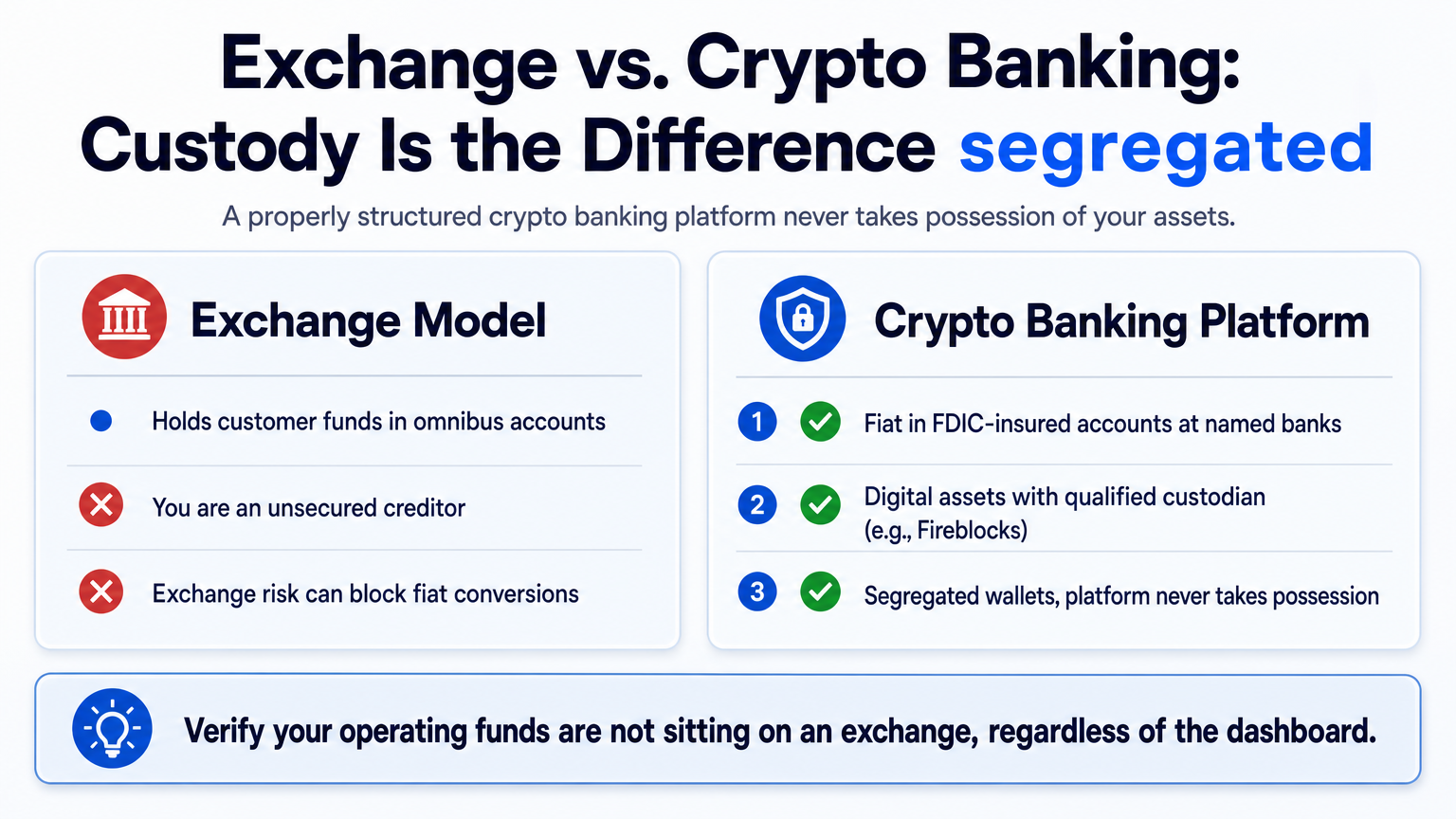
When a startup or DAO uses a crypto banking platform, the custody model typically relies on institutional-grade partners rather than a proprietary hot wallet. For example, segregated accounts and Fireblocks crypto custody—a standard for platforms like OneSafe—keep each client’s assets isolated, using multi-party computation (MPC) and hardware security modules that require multiple, physically separate approvals for any movement. Even if one administrator’s credentials were phished, an attacker cannot unilaterally drain a corporate treasury.
Additional layers include mandatory multi-factor authentication (MFA), real-time transaction monitoring with anomaly alerts, customizable roles and permissions, and fiat-crypto unification in a single dashboard. These measures shrink the attack surface dramatically. When comparing providers, the Best Crypto Business Accounts Reviewed (2026 Guide) can narrow the field, but you still need to verify the custody architecture yourself.
Adjudicating the Insurance Gap
Retail banking disclaimers, such as Regions Bank’s note that crypto lacks FDIC insurance, are accurate for consumer funds. For businesses, the risk model is different: a Web3 startup’s operating capital in USDC isn’t held as a savings deposit—it’s transactionally active. The protection that matters is theft prevention, not deposit insurance. A platform that segregates assets in a Fireblocks vault and processes USDC transactions provides safeguards that mimic institutional custody, even though it’s not FDIC-backed. Even a product called a Digital Future Crypto Checking Account does not resolve the custody question by name alone; demand proof of segregated, non-commingled custody and third-party audits.
To audit your own defenses now, ask three questions:
What should DAOs and Web3 companies do differently after this heist?
DAOs and Web3 startups face a unique challenge: treasuries often sit in multi-signature wallets, while the operational fiat leg—paying contributors, settling vendor invoices, converting USDC to USD—runs through disjointed bank accounts and exchange hot wallets. This fragmentation multiplies the attack surface.
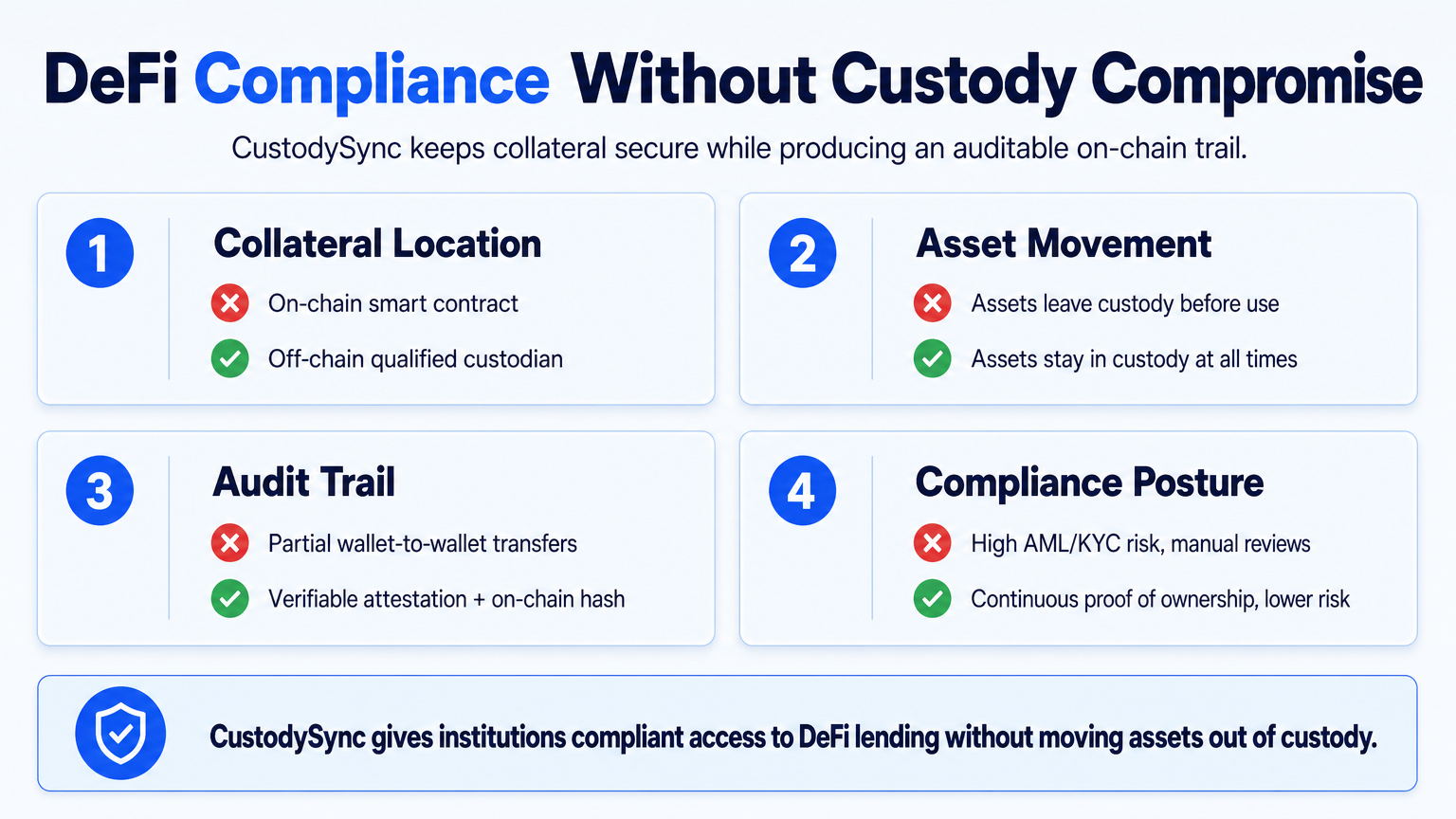
The immediate step is to consolidate fiat and crypto operations onto a single platform that applies the same security controls to every dollar and token. A crypto banking platform built for DAOs should offer customizable roles and permissions mirroring governance, automated payroll and vendor payment workflows, segregated custody backed by Fireblocks or an equivalent institutional custodian, and free USDC deposits and withdrawals.
For example, a DAO using OneSafe can set quorum-based approvals for treasury management before converting USDC to payroll, while the Fireblocks custody layer keeps private keys from any single employee or smart contract. This shift in crypto banking towards stablecoin-backed business accounts is now a defense requirement, not a convenience. The North Korea-linked crypto money laundering that followed the Binance heist shows that once funds leave your control through a weak link, recovery odds approach zero.
Will this attack lead to new crypto banking regulations?

Yes, and the trajectory was already in motion. The Binance crypto heist of 2026 will almost certainly become the incident that regulators cite when they finalize stricter rules.
Will This Be the Catalyst for Federal Crypto Custody Rules?
The OCC had already been laying groundwork for stablecoin-focused banking rules, as seen in its final rule on stablecoin issuance and the broader GENIUS Act stablecoin framework. Now regulators will likely expand those efforts to mandate that any federally supervised bank or fintech platform offering crypto services must maintain hardware-level key isolation, third-party custody audits, and real-time fraud monitoring. The security architecture that the best platforms already deploy voluntarily may soon become a regulatory floor.
The North Korean Nexus: Sanctions Compliance Will Tighten
The involvement of the TraderTraitor group will intensify sanctions enforcement. Treasury and OFAC will almost certainly update their guidance for crypto banking providers, requiring enhanced know-your-transaction checks and real-time screening against North Korea-linked wallet addresses. For a fiat crypto bank or any platform moving between USD and crypto, automated sanctions screening tools will become mandatory, not optional.
From ‘Crypto Banking’ to ‘Crypto-Ready Banking’
Expect a semantic shift. Regulators have long treated “crypto banking” as a niche; after this heist, they will push to treat it as a subset of crypto-ready banking—where every bank, and every banking platform, must have a posture for digital assets. The market already includes business products that combine payments, trading, and custody, such as Coinbase Business | Crypto Payments, Trading & Custody, alongside the broader crypto banking shift that companies like Block are pursuing. The question won’t be whether a business bank account supports crypto, but whether its security controls are fit for a world where North Korean hackers routinely target off-chain weak points.
As regulators and platforms scramble to respond, the volume of compliance updates and customer guidance will only grow. To keep pace without stretching resources, some crypto banking firms are turning to automated content tools like Joyrise, which plans, writes, and publishes illustrated SEO articles to your Webflow blog every day—so you can read your first article before you pay.
Key Takeaways
- The Binance heist was a human and process failure, not a blockchain exploit; any institution handling crypto must harden its off-chain operational security.
- U.S. banking regulators are now actively probing crypto contagion risk, and businesses with hybrid fiat-crypto accounts should expect increased compliance scrutiny.
- Startups and DAOs should require segregated MPC custody, mandatory MFA, real-time monitoring, and role-based approvals—the minimum controls this incident validates.
- The attack will accelerate federal crypto custody rules, tighten sanctions compliance around North Korean actors, and push the industry from narrow “crypto banking” to universally crypto-ready banking standards.
- For DAOs and Web3 companies, consolidating treasury operations on a unified platform with Fireblocks custody and free USDC rails is now a security prerequisite, not a luxury.
For startups and DAOs seeking a crypto banking platform that combines institutional-grade custody with seamless fiat and USDC operations, explore OneSafe’s security-first business account.
Get started with Crypto in minutes!
Get started with Crypto effortlessly. OneSafe brings together your crypto and banking needs in one simple, powerful platform.